
Madeira: the channels that cross the mountains and the fishermen's drink
Thousands of kilometres of channels dug by hand into the rock, a fishing village that invented poncha, skewers threaded on bay laurel wood. Madeira beyond the cliffs.
by Aniello Iervolino 7 min read
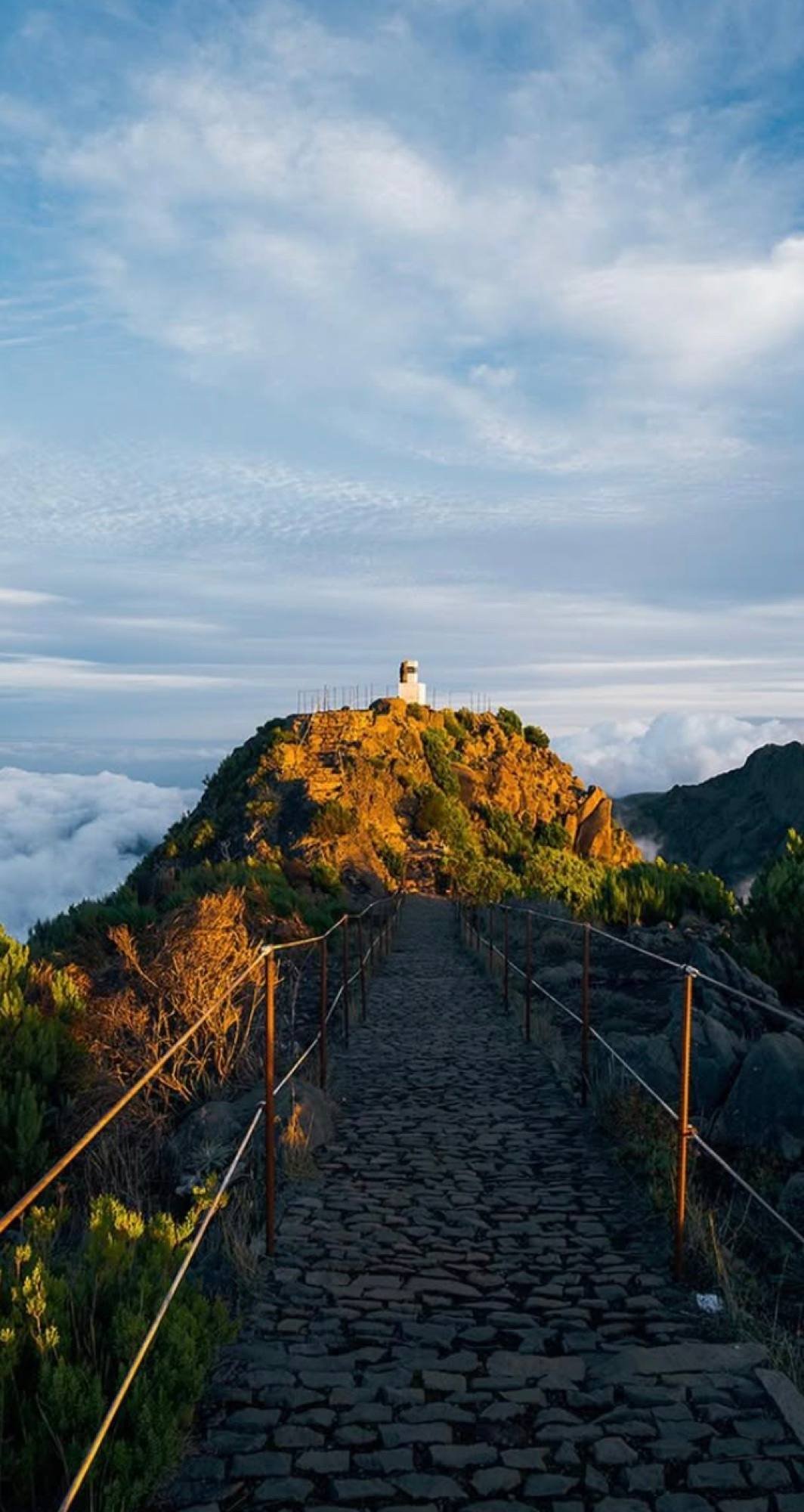
Between 0.5 and 1 per cent. That is the gradient at which water runs down a levada: enough to make it walk, too little for it to run. In a channel fifty or sixty centimetres wide, on an island where almost nothing is flat, the water travels dozens of kilometres without hurrying, and you walk beside it.
Madeira is famous for its cliffs and its paths above the clouds. Two things explain a lot about the island: the water channels dug into the mountains and poncha, the fishermen's drink.
The levadas
Madeira has a geographical problem: it rains a lot in the north and much less in the south, where the sun is good for growing things. When the Portuguese arrived, in the 15th century, and began planting sugar cane, the south needed water. So they started digging channels.
They're called levadas, from the Portuguese levar, to carry. They are narrow channels, often little more than a hand's span wide, that follow the contour lines of the mountains. They run along vertical walls, enter tunnels dug by hand, cross forests. According to the most widely quoted estimates, the network is more than two thousand kilometres long. Much of it was built by slaves and labourers lowered on ropes down cliffs that dropped sheer into the sea.
On the kilometres, it helps to know that the numbers change depending on what is counted. The BBC and many guidebooks speak of 3,100 kilometres, on an island 55 long and 22 wide. The file with which Portugal put the levadas forward to UNESCO, in 2017, stops at about 800 kilometres of public and private channels. In between is the figure of over 2,170 given by Wikipedia. Whichever is right, it is an amount of masonry out of all proportion for an island like this.
That file also tells how they changed. The first were short and rudimentary, dug in the tuff; where the rock was too hard the water ran in wooden gutters made of til, one of the trees of the forest. Then came channels in basalt masonry. For four centuries they were built by private owners, often grouped into associations of heréus, farmers who owned a share of the water and paid for the upkeep together. The state arrived only in the nineteenth century: the Levada Velha do Rabaçal, the first financed with public money, was begun in 1835 and finished in 1860. And in 1947 came the plan that took the waters of the north to the south by sending them through turbines first: above a thousand metres the water is collected, lower down it makes electricity, lower still it irrigates.
Sugar explains the hurry of the early days. According to the BBC's account the first sugar cane plant dates from 1425, six years after the Portuguese arrived, with money from Genoese backers. By the end of the fifteenth century Madeira had overtaken Cyprus as Europe's biggest exporter, and in 1506, the peak year, it shipped out 2,500 tons of what they called white gold. By 1530 production had already collapsed by ninety per cent.
On who did the hardest work historians do not agree, and it is right to say so. Some scholars on the island speak of farm workers with pickaxes and hammers. Jason W. Moore, who has devoted a study to Madeira's sugar, maintains that for the first generation of levadas slaves brought from the Canary Islands and Africa were used. Those who worked hanging from ropes had a name, rocheiros. The writer of the BBC report says it was hard to find anyone on the island willing to talk about it. When you walk along a levada, it is worth keeping in mind.
Today paths run along many levadas, the ones once used for maintenance. Walking them is the easiest way to see the inside of the island, in places roads don't reach. The job of those who keep them clean still exists: the levadeiros regulate the water and, when needed, act as peacemakers between landowners. "They are inseparable from the identity of Madeirans," Susana Fontinha, who coordinated the UNESCO candidacy, told the BBC. That candidacy, for the record, was withdrawn by Portugal in 2024, during the committee's session. The levadas remain on the Tentative List.
The water comes from a place that already has the recognition. The laurisilva of Madeira has been a UNESCO World Heritage Site since 1999: fifteen thousand hectares of laurel forest, ninety per cent of it primary, the remnant of a type of woodland that millions of years ago covered much of southern Europe. The file says it plays a decisive role in the island's water balance. Many levadas pass through it, and without that forest they would have little to carry.
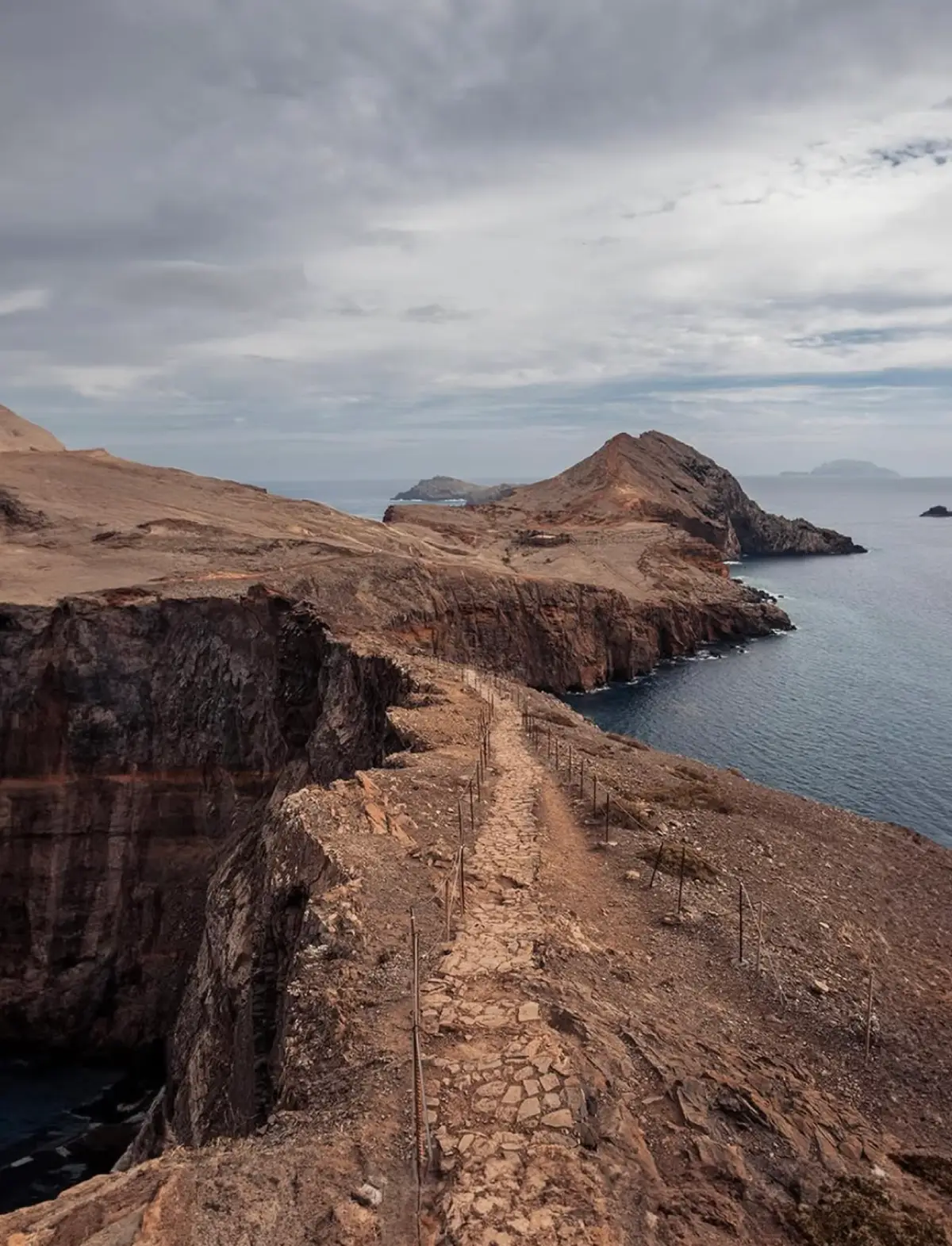
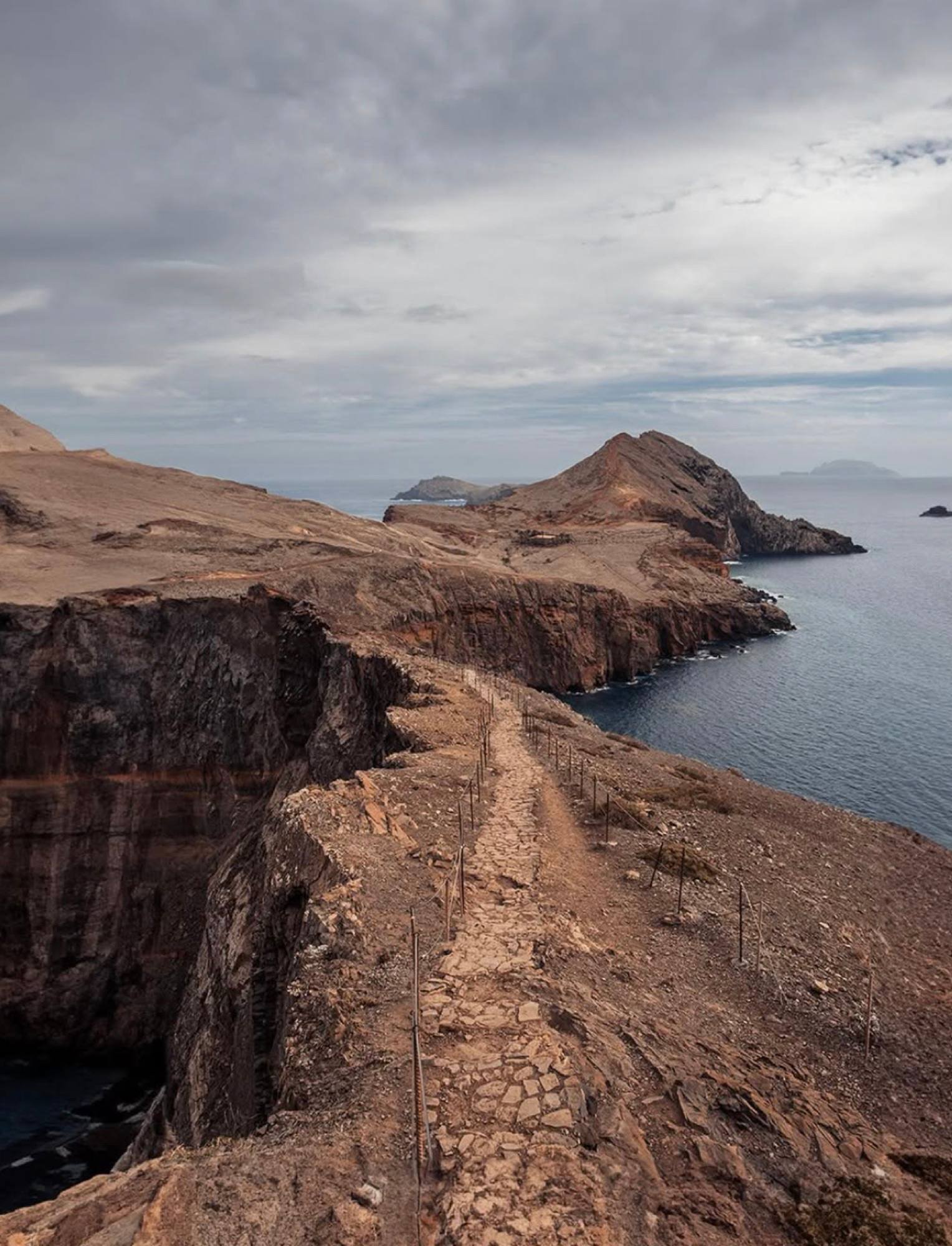
Ponta de São Lourenço, at the eastern tip of the island. The levadas don't reach here: it's the only dry, bare corner of Madeira, and it looks like another planet.
Three serious tips
- Some levadas are exposed, with a drop on one side and no protection. Find out about the route before you set off and don't underestimate the weather: fog rolls in within minutes.
- Bring a head torch for the tunnels. Some are long, dark and wet. Your phone isn't enough.
- Book first. Since 2026 the region's classified trails can only be walked with a reservation, made online on the SIMplifica portal by choosing an entry time in half-hour slots. According to the official Visit Madeira website, consulted in November 2026, the fee is generally 4.50 euros per person per trail, 3 euros if you go with an approved company, nothing for residents. You pay in advance, partly because in the mountains your phone often has no signal, and anyone entering without a reservation risks a fine. On the same page you will find the status of every trail: that day, out of forty routes, sixteen were listed as closed. Look at it that same morning.
Poncha
Along the south coast, just west of Funchal, lies Câmara de Lobos, a fishing village with colourful boats pulled up on the shore. Winston Churchill passed through in 1950 and painted its harbour. But the reason people go there today is another: poncha.
The lobos of the name are seals. When João Gonçalves Zarco landed here, in 1419, he found the bay full of monk seals, which in Portuguese are called sea wolves. Churchill, for his part, had come to rest, to paint and to work on his war memoirs, and was staying at Reid's in Funchal. He left on 12 January 1950, because a general election had been called in London. To his wife Clementine, who stayed on the island, he telegraphed that where he was there was "nothing but toil and moil".
The recipe is simple:
- Aguardente de cana, sugar cane spirit. The same cane the levadas were dug for.
- Honey, bee or cane honey.
- Freshly squeezed lemon juice.
It's mixed with a wooden stick with a rounded head. The result is sweet and sour, but it's strong: you barely taste the spirit and it goes down quickly.
The stick has an official name, mexelote, and one that everybody uses, caralhinho, which I won't translate for you. Madeira's tourist board traces poncha back to the eighteenth century and to a drink that arrived from India with the English, panche. According to the most common explanation it is the same family as punch: in Hindi pãnch means five, like the ingredients of the original version.
They say poncha was born as the fishermen's remedy for cold and colds. Today there are a thousand versions, with passion fruit, orange, tangerine. The first, the one from Câmara de Lobos, still has a name of its own, poncha à pescador: it was meant to warm those who spent the night at sea. The passion fruit one is the most popular. It usually comes with a dentinho, something to nibble, peanuts or lupin beans.
I like the fact that the island's two symbols have the same origin. The channel and the glass come from the same plant, and from the same labour of those who grew that plant.
And to eat?
- Espetada: chunks of beef with coarse salt and garlic, threaded on skewers that were traditionally bay laurel branches. They arrive hanging from a hook above the table.
- Bolo do caco: a flat, round bread, baked on stone and served hot with garlic butter. We have given it a whole article.
- Peixe-espada preto: the black scabbardfish, a monstrous-looking deep-sea fish. Here it's often eaten with fried banana. Fishing for it is a tradition of Câmara de Lobos itself.
I am a supporter of voluntary discomfort, and Madeira knows how to oblige, with its dark tunnels and the fog that takes away the view you came for. What I learned reading the history of the levadas is that the path on which people now struggle by choice was, for those who built it, a workplace.
Read our long story: Madeira, instructions for a voluntary shipwreck.
Questions and answers
What are Madeira's levadas?
They are irrigation channels built from the 15th and 16th centuries onwards to carry water from the rainy north to the drier south of the island. Paths that can now be walked run along many of them.
What is poncha?
It's Madeira's traditional drink: sugar cane spirit, honey and lemon juice, mixed with a wooden stick. It was born in fishing villages, in particular Câmara de Lobos.
sources
- Levada (Madeira), Wikipedia
- Poncha, Wikipedia
- Câmara de Lobos, Wikipedia
- Levadas of Madeira Island, Portugal's Tentative List, UNESCO World Heritage Centre, 2017
- Decision 46 COM 8B.23, Levadas da Madeira, UNESCO World Heritage Committee, 2024
- Laurisilva of Madeira, UNESCO World Heritage Centre
- The dark history behind Madeira's famous levadas, BBC Travel, 2024
- Hiking, Visit Madeira (official tourist board), 2026 rules and fees for classified trails
- Poncha, Visit Madeira (official tourist board)
- Churchillian Traveler: Churchill's Madeira, Terry Reardon, Finest Hour 121, International Churchill Society, 2003-04
- Filete de espada, Visit Madeira (official tourist board)