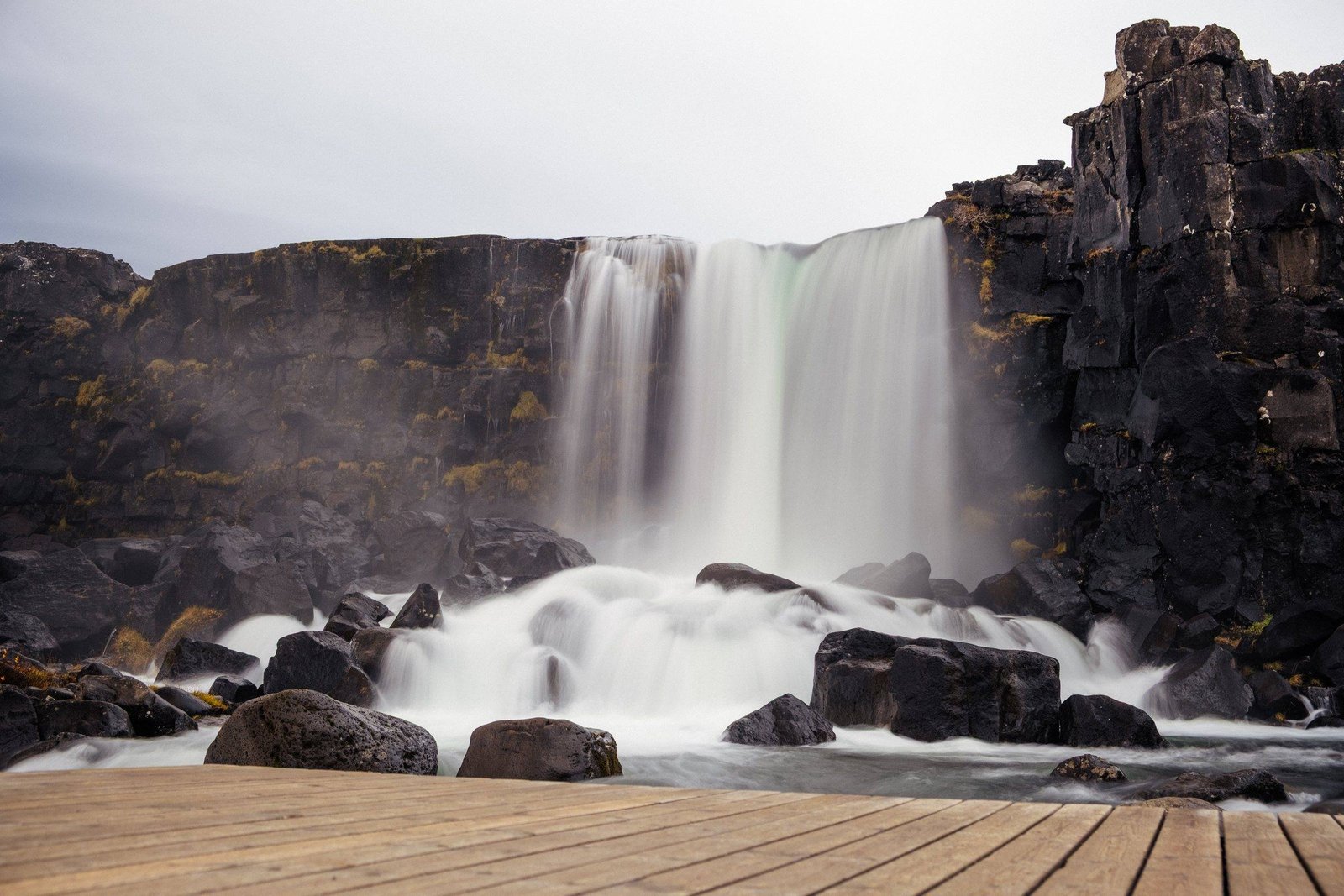

When to go to Iceland: the best time, month by month
Midnight sun or northern lights, open roads or ice caves, puffins or snowy landscapes. When to go to Iceland depending on what you want to see, with daylight hours and temperatures month by month.
by Aniello Iervolino 8 min read
In short
- There's no single best time: summer (June-August) has almost 24 hours of light and all roads open, winter has few hours of light but northern lights and ice caves.
- For the northern lights you need dark nights: from late August to mid-April. September, October and March are a good compromise between light and darkness.
- In Reykjavík there are about 4 hours of daylight in December and about 21 in June; average temperatures range from about 0 °C in winter to about 11-12 °C in summer.
At the end of November 2026, to give an example, SafeTravel issued an alert for the whole of Iceland: wind between 15 and 25 metres per second, gusts of up to 35. That is more than 120 kilometres an hour. The advice that comes with the notice fits into two words: change plans. In Reykjavík, meanwhile, the November thermometer reads on average two degrees above zero. Anyone who looks only at the temperature sets off without a worry.
That is why, before asking yourself when to go to Iceland, it's worth asking what you want to see and what you are prepared to put up with. Iceland in summer and Iceland in winter are two different countries: in one it never gets dark, the other stays in the dark almost all day. Both are worth the trip.
Iceland in brief, season by season
| Period | Light | What there is | What's missing |
|---|---|---|---|
| June-August | Almost 24 hours in June, bright nights | F roads open, highlands, puffins, hikes | Aurora (it's never dark), high prices, crowds |
| September-October | Falling, days still long | Aurora, autumn colours, fewer tourists | Unstable weather, first closures |
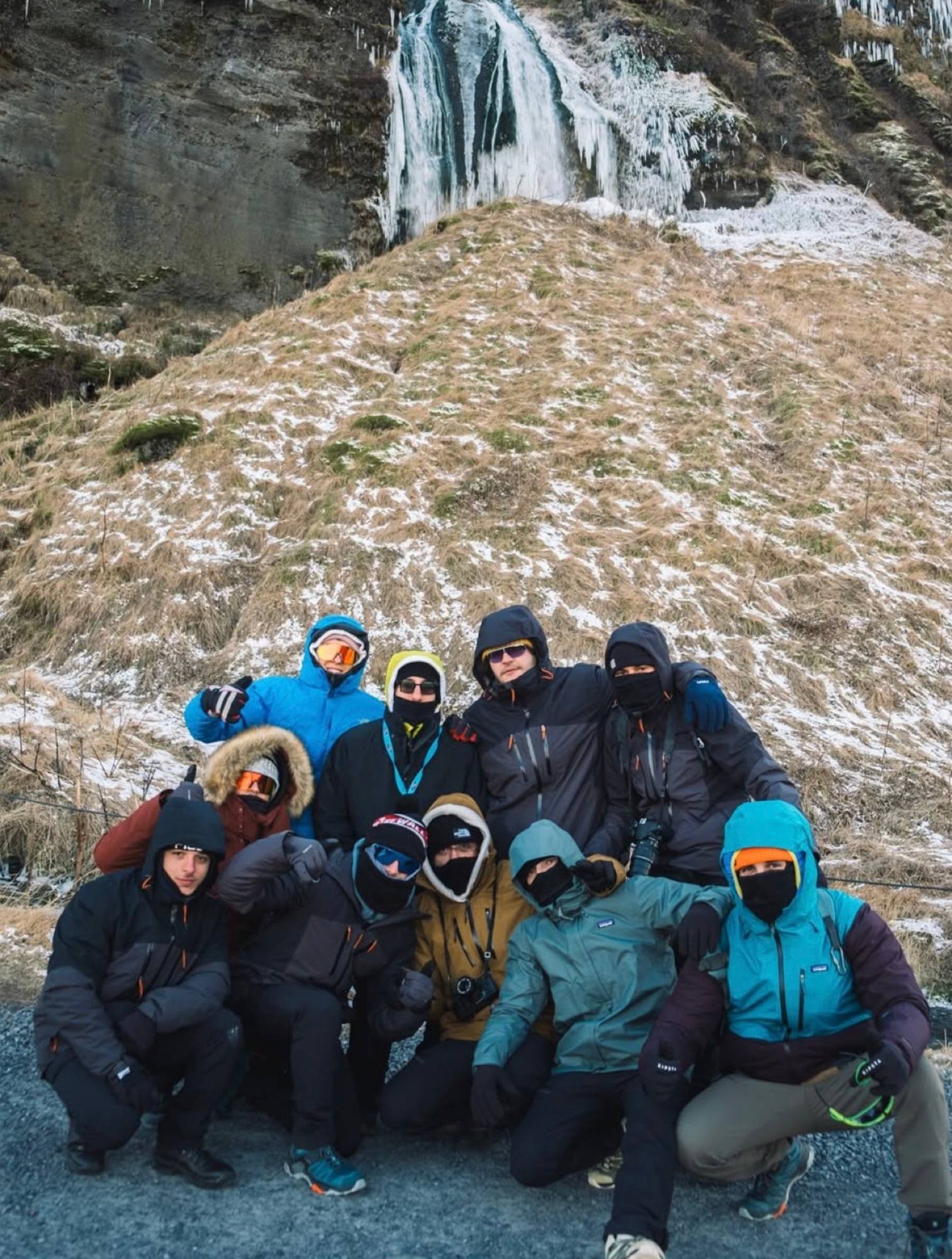
| November-February | A few hours | Aurora, snow, ice caves | Roads sometimes closed, many hours of darkness |
| March-May | Rising | Aurora until April, more light | Late snow in the north, mud in spring |
Month by month, in three numbers
Three columns say almost everything: how cold it is, how much light you have and how many people you'll find.
| Month | Average temperature in Reykjavík | Hours of daylight on the 15th | Foreign visitors departing from Keflavík in 2025 |
|---|---|---|---|
| January | 0.7 °C | 5 h 25 | 122,000 |
| February | 0.5 °C | 8 h 39 | 149,000 |
| March | 1.2 °C | 11 h 42 | 152,000 |
| April | 3.7 °C | 15 h 05 | 149,000 |
| May | 6.7 °C | 18 h 24 | 160,000 |
| June | 9.8 °C | 21 h 02 | 234,000 |
| July | 11.6 °C | 19 h 43 | 302,000 |
| August | 11.0 °C | 16 h 25 | 313,000 |
| September | 8.5 °C | 13 h 03 | 224,000 |
| October | 4.9 °C | 9 h 50 | 201,000 |
| November | 2.2 °C | 6 h 31 | 142,000 |
| December | 0.8 °C | 4 h 13 | 120,000 |
The temperatures are the Icelandic Meteorological Office's 1991-2020 averages, the hours of daylight are those for 2026 according to timeanddate, the visitors are those counted by Ferðamálastofa, the tourist board. August 2025, with 313,000 departures, has more than two and a half times as many people as December. The hotels confirm it: 89% occupancy in July, 45% in December.
The light, the real yardstick
In Reykjavík, around the winter solstice, the sun stays above the horizon for only about 4 hours: on 21 December it rises at 11:22 and sets at 15:29. In June, around the summer solstice, there are about 21 hours of daylight, and the rest is a twilight that never turns into night. In the north the differences are even stronger: in Akureyri there are three hours of daylight on 21 December and twenty-three and a half on 21 June.
For photographers this changes everything: in summer you can shoot at midnight, in winter sunrise and sunset are only a few hours apart and the light stays low and warm all day.
There is a third fact the guides rarely mention: speed. In October Reykjavík loses about six and a half minutes of light a day. Someone arriving on the first of the month has eleven hours and twenty minutes of daylight, someone leaving on the 31st has eight. In a week's trip, three quarters of an hour disappear. In March the opposite happens, at the same speed, and setting off knowing that every day will be longer than the one before has a certain effect.
Icelanders had settled the matter by dividing the year in two. In the old calendar the halves were called, more or less, the season of short days and the nightless season.
The temperatures
Iceland is less cold than its name suggests, thanks to the Gulf Stream: a branch of it, the Icelandic Meteorological Office explains, flows along the south and west coasts and greatly moderates the climate. In Reykjavík the January average is around 0 °C and the July average around 11-12 °C. It's colder in the north and in the highlands.
As a Calabrian, I find an average of 11.6 degrees in July looks like a misprint. The Meteorological Office puts it more elegantly: even in midsummer the sky is often overcast, the sun does little to warm the air and the word local people use for the cool daytime air is "refreshing".
The number on the thermometer matters little, though. What matters is the wind, which can make a day at 5 degrees harder than one at minus 5 with no wind, and the storms that close roads in winter. These are the wind figures: in the lowlands it exceeds 18 metres per second, that is 65 km/h, on ten or twenty days a year, and in some parts of the highlands on more than fifty. The strongest gust ever measured on the island is 74.2 metres per second, 267 km/h. Check the alerts on safetravel.is and the state of the roads on road.is every morning. In winter SafeTravel recalls two things worth taking literally: a 4x4 helps but doesn't stop you skidding on ice, and if the weather gets worse the right choice is to wait in a safe place.
Icelandic has a word for days that deceive: gluggaveður, window weather. It is weather that looks beautiful from inside and is unpleasant outside. I find it useful at home too, for decisions made by looking at a photograph.
What to see depending on the time of year
- Northern lights: from late August to mid-April, with a clear sky. Visit Iceland gives September to April and points to more activity around the September and March equinoxes. Everything you need to know is in when and where to see the aurora.
- Midnight sun: from late May to late July the nights stay bright across the whole country. The sun that doesn't set at all can only be seen in the far north, around the Arctic Circle that crosses the island of Grímsey: in Reykjavík on 21 June it sets three minutes after midnight and rises again before three.
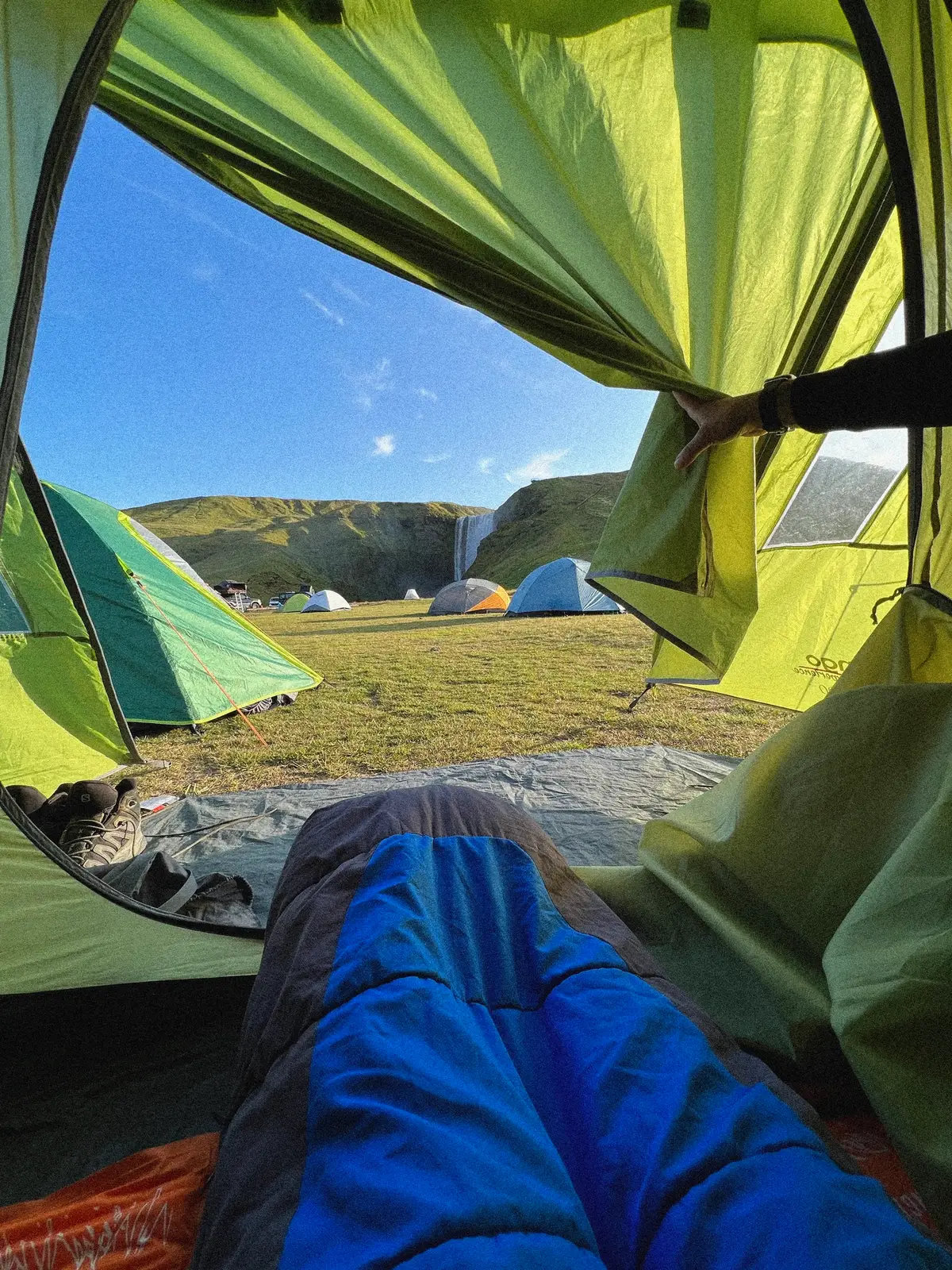
- F roads and highlands (Landmannalaugar, Askja): usually from late June to September, depending on the snow. The dates change every year. Vegagerðin publishes the openings of the last five years: between 2021 and 2025 the road to Landmannalaugar from Sigalda opened on average on 2 June, the Kjölur track on 1 June, Sprengisandur on 6 July, with swings of up to a month from one year to the next.
- Ring Road and main roads: paved and kept open all year, with temporary, local closures when bad weather demands it. Secondary roads are a story of their own: Route 864, which leads to Dettifoss from the east, for example, closes with the first autumn snows and reopens when the mud has dried.
- Ice caves: in winter, roughly from November to March, only with authorised guides. Since autumn 2025 Vatnajökull National Park has kept the caves closed from May to September.
- Puffins: in summer, on the cliffs of Dyrhólaey, Látrabjarg and the Westman Islands. They arrive between late April and early May and leave by the end of August; the best period runs from May to mid-August. About 60% of the world's Atlantic puffins breed in Iceland. At Dyrhólaey, usually from mid-May to late June, access is limited to the hours between 9 am and 7 pm.
- Autumn colours: September and early October, when moss and birches turn red and yellow.
The Icelanders' calendar
Choosing the time of year by looking only at landscape and weather leaves out the people who live on the island, and every season has its own way of being together.
The first day of summer, Sumardagurinn fyrsti, falls on the Thursday between 19 and 25 April and is a public holiday. In April the Reykjavík average is 3.7 degrees. I like a country that celebrates summer on trust.
In September there is the réttir: the sheep, which have spent the summer free in the highlands, are rounded up on horseback and sorted in the pens, farm by farm. The south's tourist office describes it as an event that brings together families, friends and visitors. If you drive in those days, the sheep on the road have right of way in practice.
In December, when there are four hours of daylight, the Jólabókaflóð arrives, the Christmas book flood: new titles come out in the months before the holidays and a book is the most common Christmas Eve present. Between mid-January and mid-February, in the month the old calendar calls Þorri, comes Þorrablót, the midwinter dinner with speeches and poems. The first one on record was organised in 1873 by Icelandic students in Copenhagen. Winter, here, is spent eating together and reading. As a plan it seems sound to me.
One date to avoid if you're looking for empty campsites: the first Monday of August is a holiday, and that long weekend is usually the busiest of the year for Icelanders' own travel.
Our advice
If it's your first trip and you want to see a bit of everything, aim for September or early October: there's still enough light to photograph the landscape, the nights are dark enough for the aurora and the summer tourists have thinned out. In October 2025 departures of foreigners from Keflavík were about a third fewer than in August. It's the same reason we chose mid-October for our expedition: we wrote about it in Iceland in October.
You already know the downside from the top of this page: in autumn the weather is unstable, and an October programme needs a spare day. If you prefer days that are getting longer rather than shorter, look at March: the aurora is still there, the light grows by six and a half minutes a day and in Reykjavík the average is one degree.
To know where to go once you're there, read what to see in Iceland.
Frequently asked questions
What's the best month to go to Iceland?
It depends on what you want to see. To drive everywhere and have lots of light, July and August. For the northern lights, from September to March. September and October are a good compromise: fewer tourists, enough light and dark nights.
Is it very cold in Iceland in winter?
Less than you'd think: in Reykjavík the January average is around 0 °C, thanks to the Gulf Stream. The real problem is the wind, which makes temperatures feel much lower, and the storms that close the roads.
When can you drive the F roads in the highlands?
Usually only in summer, roughly from late June to September, depending on the snow. The dates change every year: check road.is before leaving.
sources
- Climate of Iceland, Icelandic Meteorological Office (Veðurstofa Íslands)
- Climate of Iceland, Wikipedia
- Aurora forecast, Icelandic Meteorological Office
- Road conditions, Vegagerðin
- SafeTravel Iceland, current alerts — checked on 27 November 2026
- Sunrise, sunset and daylight hours in Reykjavík — timeanddate.com, 2026
- Sunrise, sunset and daylight hours in Akureyri — timeanddate.com, 2026
- Tourism in Iceland in figures, January 2026 — Ferðamálastofa (Icelandic Tourist Board), 2025 data
- Winter driving — SafeTravel Iceland
- gluggaveður — Wiktionary
- Northern lights in Iceland — Visit Iceland
- Grímsey — Wikipedia
- When do mountain roads open, dates 2021-2025 — Vegagerðin
- Driving in Iceland — Visit Iceland
- Dettifoss — Vatnajökull National Park (Vatnajökulsþjóðgarður)
- Visitor numbers may be limited on Vatnajökull ice cave tours — The Reykjavík Grapevine, 16 September 2025
- Meet the peculiar puffins in Iceland — Visit Iceland
- Visiting Dyrhólaey: what to know before you go — Visit South Iceland
- Icelandic calendar — Wikipedia
- Public holidays in Iceland — Wikipedia
- Step into Icelandic culture: the réttir sheep round-up — Visit South Iceland
- Jólabókaflóð — Wikipedia
- Þorrablót — Wikipedia