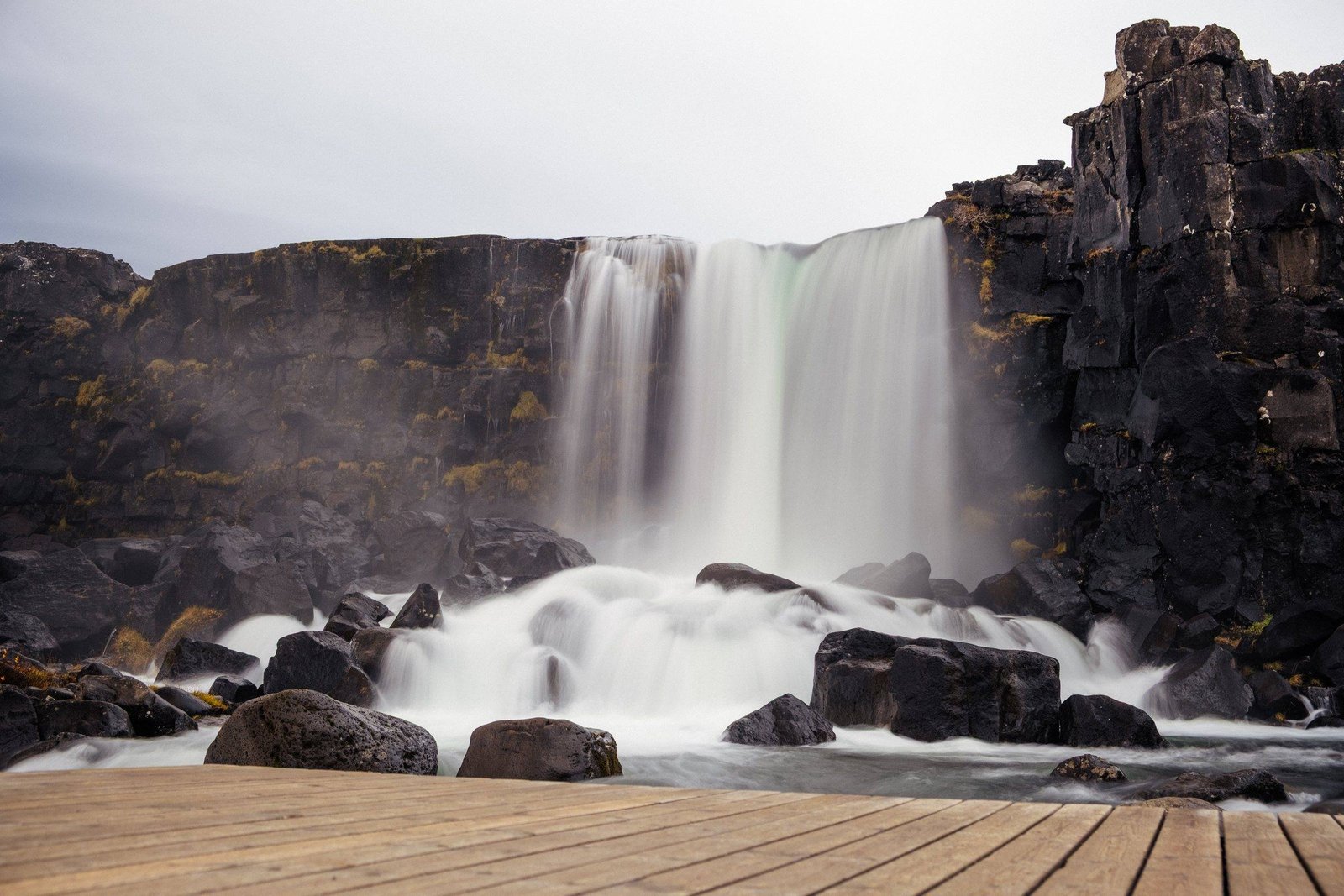

Iceland by camper van: the complete, no-filter guide
Hire, rules, campsites, costs, the Ring Road in 7-10 days and the mistakes not to make. Everything you need to experience Iceland by camper van.
by Aniello Iervolino · updated 12 min read
In short
- In Iceland free camping with vehicles is not allowed: you sleep at official campsites, some of which close in the low season.
- Hire is the biggest expense; a 2WD van costs less but can't drive the F roads.
- Drive carefully in crosswinds and on single-lane bridges, and stock up on food at the Bónus and Krónan supermarkets.
In this article 12 parts
- Iceland by camper van: real freedom
- Hiring a camper van in Iceland (spoiler: it isn't cheap)
- Camping in Iceland: goodbye free wild camping
- Where to stop for the night (without fines)
- Weather and safety: be ready for anything
- Driving in Iceland: single-lane bridges and killer wind
- Supplies: food, fuel and gas canisters
- How much does a camper van trip to Iceland cost?
- Ring Road itinerary: 7-10 days by camper van
- Survival checklist
- Mistakes to avoid (so you don't end up in the local news)
- The luxury of freedom
Touring Iceland by camper van isn't a trip, it's a social experiment: you against the weather. One hour sunshine, the next hour wind that knocks over your moka pot. And yet it's the best way to experience the island: you park wherever you fancy (at campsites, we'll get to that), sleep in front of a waterfall, change plans without feeling guilty.
In this guide you'll find practical tips, the Ring Road itinerary, costs, campsites, rules and a few pointers so the wind doesn't get the better of you (spoiler: "slammed door" insurance, the one everybody would like, doesn't exist at the company I hired from).
I wrote this guide in 2025. At the end of November 2026 we reopened it and rechecked rules and numbers on the official pages. The jokes have stayed where they were. Three things have changed: since January 2026 there has been a kilometre fee for all vehicles, since September 2026 there have been two tolls, and the slammed door, as I said, is on you.
Iceland by camper van: real freedom
In Iceland the camper van is your superpower. No timetables, no "check-out by 10": here you decide. The weather changes its mind? So do you. Want to sleep near the start of a trek? Just switch off the engine at the nearest campsite. It's the luxury of being able to say: "Tomorrow, who knows, we'll see".
This freedom is younger than it looks. The Ring Road, route number 1 that circles the island, was only completed in 1974, with the opening of the bridge over the river Skeiðará, in the south-east. Before that, to drive from Vík to Höfn you had to go round by the north, through Akureyri. Today the ring measures 1,309 km.
I am a supporter of voluntary discomfort, and a camper van in Iceland is an almost perfect form of it. There are moments when you think back fondly on the sofa at home. They are the same ones you then tell people about for years.
Hiring a camper van in Iceland (spoiler: it isn't cheap)
I chose Kuku Campers: spartan vans, but they stand up to the Icelandic wind better than I do. Alternatives: 2WD vans (cheaper, but no F roads) or 4x4s (perfect if you want to ford rivers like in adventure films, less perfect for your wallet).
Serious advice: don't skimp on the extra insurance. Gravel, sand/ash, tyres, windscreen: they seem excessive until you find yourself picking up bits of plastic in a supermarket car park in Vík.
Before you sign, read the hire company's insurance page. Kuku's, in November 2026, works like this. Basic cover is included, but leaves you liable for damage up to €3,000. For €20 a day the excess drops to €750, for €30 it drops to zero. Separately there are gravel protection (without it, a stone on the windscreen costs you up to €500), sand and ash protection and tyre insurance, at €10 a day each. Two packages bundle them, at €35 and €50 a day.
Then there is the list of what no package covers: river crossings, the undercarriage, off-road driving and doors damaged by the wind. In the first version of this guide I had put wind damage among the cover to buy. Kuku's page says the opposite: wind damage to doors is never covered, at any level. Their advice is to open the door holding it with both hands, especially on the south coast. If you hire elsewhere, get it in writing.
Also from them: 2WD vans cannot go on the F roads, or the insurance is void. 4x4s can, except the F88, the F210 and the F249, which are off limits to all their vehicles because of the deep river crossings. And above 15 metres per second of wind, 54 km/h, they advise against driving.
One last question, new since 2026: is the kilometre fee in the price? Since 1 January every vehicle up to 3.5 tonnes has paid ISK 6.95 per kilometre. For short-term rentals the company can pay a flat fee of ISK 1,390 for each rental day started, about €10, and charge it to the customer as a separate line.
Camping in Iceland: goodbye free wild camping
Let's say it straight away: wild camping with vehicles is no longer allowed. If you were thinking of parking anywhere, American road-movie style, forget it. The rule is simple: use the official campsites. And there's no shortage of them: scenic, with showers (sometimes coin-operated) and often a shared kitchen.
For the legal details there's the Environment Agency of Iceland. Want to save money? Look at the Iceland Camping Card.
The legal details are these. The law is Act No. 60 of 2013 on Nature Conservation: it is illegal to spend the night in camper vans, caravans, tent trailers and similar vehicles outside organised campsites or urban areas, unless the landowner has given permission. In the national parks the rule is stricter still: in Vatnajökull you use campsites only, at Þingvellir you don't stay overnight outside the marked areas. The exception for a tent pitched for one night on uncultivated land concerns people travelling on foot or by bike, never vehicles.
On the Camping Card: the price and the participating campsites change every season. Look at them on the card's website in the year you travel and do the sum on the nights you will really spend at those campsites.
Where to stop for the night (without fines)
Official campsites are often in absurd places: you wake up with a view of a fjord and think you've ended up inside a screensaver. In the low season some close, so always check up-to-date opening times and facilities.
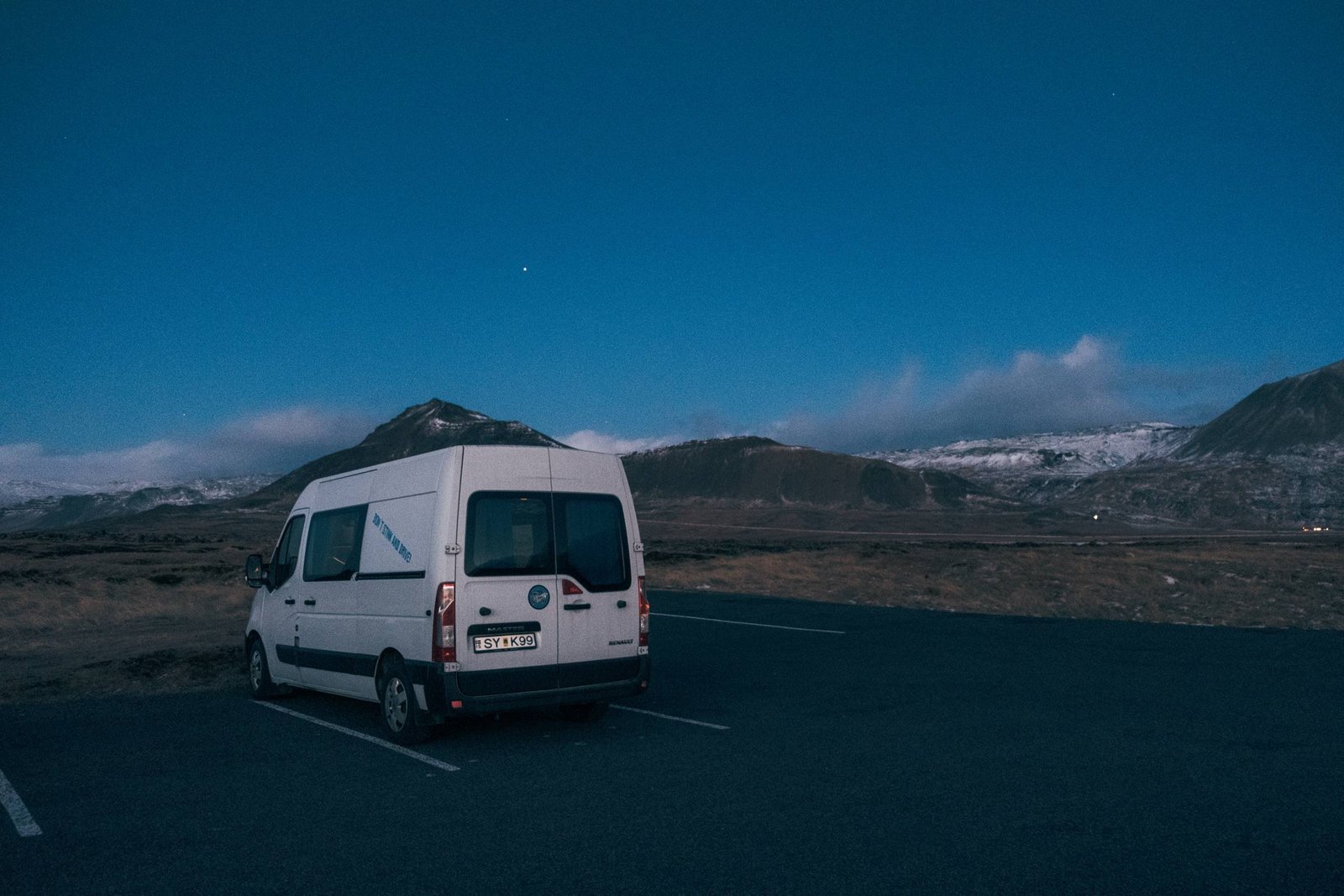
On the road in Iceland: when the car park is worth more than a five-star hotel.
Visit Iceland gives the calendar: most campsites open from May to September, and some stay open all year, mainly for camper vans. Watch out for the first weekend of August, when the holiday Icelanders call verslunarmannahelgi falls: many go camping and the pitches run out.
Two price lists read in November 2026: at Skaftafell, in Vatnajökull National Park, ISK 2,800 per person per night with showers and tax included; at Þingvellir ISK 1,800 per person, plus ISK 400 in lodging tax for each vehicle. At the European Central Bank rate of 26 November 2026, 137 krónur to the euro, that is about €20 and €13.
Weather and safety: be ready for anything
In Iceland they say that if you don't like the weather, wait five minutes. It isn't a joke. Bring technical layers, a waterproof jacket, gloves and a hat, even in August.
Essential apps: Vedur for weather and wind, SafeTravel for alerts and 112 Iceland for emergencies.
To give you the measure: between 26 and 27 November 2026 the alert on the SafeTravel homepage reported, between Vík and Höfn, winds of 15 to 25 metres per second with gusts up to 35, which is 126 km/h. A tall van, in that wind, is a sail. SafeTravel advises checking weather and roads in the morning and then several more times during the day. For the roads there is also a phone number, Vegagerðin's 1777. For emergencies, 112.
Driving in Iceland: single-lane bridges and killer wind
Speed limits: 50 km/h in towns, about 80 on gravel, about 90 on tarmac. But the real enemy isn't the limit, it's the crosswind. Add single-lane bridges and dark tunnels and you'll see why driving in Iceland is also a test of patience. Up-to-date road information on road.is.
Vegagerðin, the road administration, confirms the three limits and adds that 90 is the highest legal speed anywhere in the country. On single-lane bridges the limit is 50 and whoever arrives first goes first. On roundabouts the inner lane has right of way. Headlights stay on at all times.
Then there is a rule that seems written for people travelling with a camera: you don't stop in the middle of the road, or on the side of it, to take a photo. SafeTravel puts it second among its twelve tips. You look for a lay-by, even if the light goes in the meantime.
In summer you'll also find sheep on the road. Lambs are born in spring and roam free across the island until the end of summer. They descend from the animals brought by the settlers between the late ninth and early tenth centuries: when it comes to right of way, they have a certain seniority.
F roads: you need a 4x4 and your brain switched on. River crossings aren't tourist attractions, they're trouble on its way if you don't know what you're doing.
The F roads are the mountain roads of the interior. Many follow the routes medieval Icelanders used to reach the Alþing, the assembly at Þingvellir. They usually open between late June and early July and close again in mid-September: Vegagerðin publishes the average dates road by road, and for the Sprengisandur, the F26, the average of the last five years is 6 July. Going in early means heavy fines. And SafeTravel warns: no insurance covers damage to a vehicle during a river crossing.
The tolls, of which there was only one in the first version of this guide, are now two.
The first is the Vaðlaheiðargöng tunnel near Akureyri: 7.4 km opened in December 2018. You pay online, there's no toll booth. On the price list in force since 2 March 2026 one trip costs ISK 2,216 under 3.5 tonnes and ISK 3,087 between 3.5 and 7.5. You have 24 hours before or after driving through, then the claim goes to the vehicle's registered keeper.
The second is new: since September 2026 you pay for the new stretch of Ring Road at Hornafjörður, near Höfn, opened in June, which shortened the ring by 12 km. It costs ISK 1,500 per trip under 3.5 tonnes and ISK 2,100 between 3.5 and 7.5. Cameras read the number plate and the bill goes to the vehicle's owner; a single trip can be paid on the operator's website, spolur.is. When you collect the camper van, ask how both are handled.
Supplies: food, fuel and gas canisters
First rule: stock up in Reykjavík. Supermarkets to note down: Bónus (the yellow piggy is your friend) and Krónan.
Fuel: don't wait for the reserve light, petrol stations here don't pop up like mushrooms. Chains: N1, Olís, Orkan. You need a card with a PIN.
The PIN is no joke: Visit Iceland writes that at most petrol stations you can only pay by card and code, not in cash. For prices there is Gasvaktin, which collects them station by station: on 27 November 2026 petrol cost ISK 274 a litre at the median station and diesel ISK 331, that is about €2 and €2.40.
Water, on the other hand, is free. Tap water is drinkable all over the island: fill your bottles at the campsites.
Gas: ask at campsites or at the main petrol stations. Don't assume your European canisters will be compatible.
How much does a camper van trip to Iceland cost?
The million-krona question. Here's an average (high season, 2 people). Take these numbers as an order of magnitude, not as law carved in lava:
| Item | Indicative range | Ironic but true notes |
|---|---|---|
| 2WD van hire | €90-180/day (seen in 2025) | + extra insurance (trust us, you need it) |
| 4x4 camper | €150-260/day (seen in 2025) | Needed for F roads and film-style adventures |
| Kilometre fee | ISK 1,390/day, about €10 (Nov 2026) | Ask whether it's already in the price |
| Campsites | ISK 2,000-3,500 pp/night, about €15-26 (Nov 2026) | Sometimes coin-operated showers. Sometimes cold. |
| Fuel | about €2/litre for petrol (27 Nov 2026) | Fill up every 200-300 km |
| Tolls | ISK 2,216 and ISK 1,500 per trip (Nov 2026) | Online, no toll booth |
| Groceries | €60-100/week pp (2025 estimate) | At discount supermarkets you survive. At restaurants you sell a kidney. |
The lines dated November 2026 come from the official pages you'll find among the sources. Hire and groceries are the numbers from the first version, from 2025: we weren't able to recheck them, because hire companies only show the price after you enter your dates. That is the method: enter your dates on two or three sites, note what each quote includes and compare the totals, insurance included. In how much a photography trip to Iceland costs there is the outline line by line.
Ring Road itinerary: 7-10 days by camper van
The classic loop runs anticlockwise.
- Day 1 · From Reykjavík to the Golden Circle (Þingvellir, Geysir, Gullfoss). Campsite in the area.
- Day 2 · South coast: waterfalls and black beaches. Night in Vík.
- Day 3 · Skaftafell and Vatnajökull. Sleep near Höfn.
- Day 4 · Glacier lagoons, then the eastern fjords.
- Day 5 · Dettifoss, Mývatn or whale watching in Húsavík.
- Day 6 · Goðafoss, then Akureyri. Pay the tunnel toll online.
- Day 7 · The Tröllaskagi peninsula or Hvítserkur, then west.
- Days 8-9 · Snæfellsnes: Kirkjufell and around.
- Day 10 · Back to Reykjavík. If you like, finish by relaxing at the hot springs.
A few notes so you know what you are looking at through the window. At Þingvellir you are in the place where the Alþing, the Icelandic parliament, met from 930 to 1798: it has been a UNESCO World Heritage Site since 2004 and the car park costs ISK 1,000. Vatnajökull National Park has been a UNESCO site since 2019, and the car parks at Skaftafell and Jökulsárlón cost ISK 1,110. Dettifoss is reputed to be the second most powerful waterfall in Europe. And the glacier at the end of Snæfellsnes is the one where Jules Verne, in 1864, placed the entrance in Journey to the Centre of the Earth.
Seven days are enough to close the ring, but you close it by driving a lot. With ten you have the margin to stay put for a day when the wind decides for you. If you travel with a camera, our photography itinerary on the Ring Road thinks about the light stop by stop.
Want to spend less? Read Iceland on a budget: ideas and tricks.
Survival checklist
- Technical layers, waterproof shell, gloves, hat
- Waterproof boots + shower flip-flops (trust us)
- A giant power bank and a universal adapter
- Offline playlists and maps (signal doesn't last for ever)
- A warm sleeping bag, ideally tested below zero
- Pasta, rice and snacks for "days without shops"
- Duct tape, MacGyver style, for doors and windows that bang
- Sunglasses and sun cream (yes, you need them here too)
- First-aid kit
- Coins or cards for coin-operated showers
- A water bottle and a card with a PIN
Mistakes to avoid (so you don't end up in the local news)
- Underestimating the wind (and then chasing the tailgate across the car park)
- Driving tired at night with sheep lying in wait
- Miscalculating fuel stops: the nearest pump may be 80 km away
- Parking anywhere, thinking "nobody will see me anyway"
- Taking a 2WD onto the F roads: no, optimism isn't enough
- Stopping on the carriageway for a photo
- Forgetting a toll: the claim goes to the hire company, and then to you
The luxury of freedom
Iceland by camper van means falling asleep in front of a volcano and waking up with sheep staring at you. You don't need starred hotels: a sky full of racing clouds is enough. Or northern lights, if you're lucky.
In 1936 the poet W. H. Auden travelled round the island with Louis MacNeice, and in the book that came of it, Letters from Iceland, there is a prose chapter entitled "For Tourists". Ninety years on we are still writing advice for tourists, and I like to think the reason is the same: here, preparation is what lets you afford the unexpected. You check the wind and hold the door with both hands. Then you say "tomorrow, who knows, we'll see", and you say it calmly.
Want to see what Iceland is like with a camera in your hand and a real crew? Follow us on Instagram.
Frequently asked questions
Do you need a 4x4 to tour Iceland by camper van?
For the Ring Road in summer a 2WD is enough. For the F roads a 4x4 is compulsory.
Can you wild camp in Iceland?
Not with vehicles. You always sleep at official campsites.
What's the best time for Iceland by camper van?
From June to September if you want long days. In winter you need serious driving experience.
How do you pay the toll near Akureyri?
The Vaðlaheiðargöng tunnel is paid online at veggjald.is. There are no toll booths.
sources
- Road conditions, Vegagerðin (Icelandic Road Administration)
- Traffic and road closures map, Umferdin.is
- SafeTravel Iceland, alerts and travel safety
- Iceland, Viaggiare Sicuri (Italian Ministry of Foreign Affairs, in Italian)
- Where Can You Camp?, Umhverfisstofnun (Environment Agency of Iceland), Act No. 60/2013 on Nature Conservation
- Camping in Iceland, Visit Iceland, updated 4 November 2026
- Driving in Iceland, Visit Iceland
- Driving safely in Iceland, Vegagerðin (Icelandic Road and Coastal Administration)
- Opening of mountain roads, average dates 2021-2025, Vegagerðin
- The Icelandic Highland Interior, Vegagerðin
- Toll on the Ring Road at Hornafjörður from September 2026, Vegagerðin, 31 August 2026
- Verð og greiðsluleiðir, Vaðlaheiðargöng tunnel price list in force since 2 March 2026 (in Icelandic)
- Vaðlaheiðargöng, English Wikipedia
- Top 12 tips for driving in Iceland, SafeTravel
- Highland driving, SafeTravel
- Campervan Insurance in Iceland, Kuku Campers, consulted in November 2026
- FAQ, Kuku Campers, consulted in November 2026
- Kilometer fee on vehicles, Skatturinn (Iceland Revenue and Customs) on Ísland.is, 2026
- Register rental cars on a daily fee/kilometer fee, Skatturinn on Ísland.is, 2026
- Price list, Vatnajökull National Park, consulted in November 2026
- Camping, Þingvellir National Park, consulted in November 2026
- Parking service, Þingvellir National Park, consulted in November 2026
- Gasvaktin, fuel prices in Iceland station by station, reading of 27 November 2026
- Euro foreign exchange reference rates: Icelandic krona, European Central Bank, 26 November 2026
- Icelandic tap water, Visit Reykjavík
- Route 1 (Iceland), English Wikipedia
- Þingvellir, English Wikipedia
- Vatnajökull National Park, English Wikipedia
- Dettifoss, English Wikipedia
- Snæfellsjökull and Jules Verne's Journey to the Centre of the Earth (1864), English Wikipedia
- Icelandic sheep, English Wikipedia
- W. H. Auden and Louis MacNeice, Letters from Iceland (1937), English Wikipedia entry