
Shrines and temples in Japan: the difference and how to behave
At shrines you clap your hands, at temples you don't. What a torii is, how to purify yourself at the fountain, when to bow: the etiquette of Japan's sacred places, explained simply.
by Aniello Iervolino 7 min read
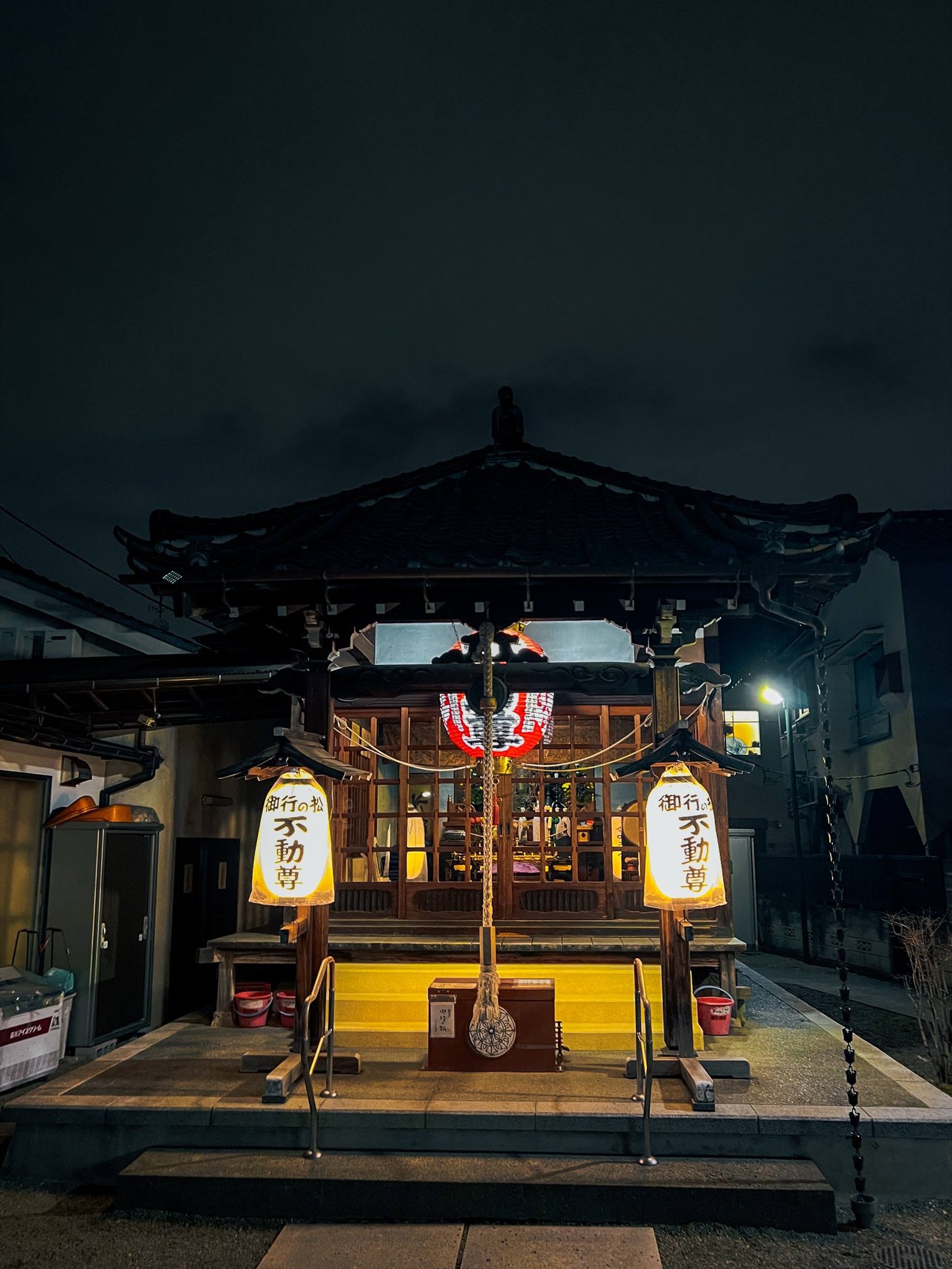
On the website of the association that brings together Japan's Shinto shrines, Jinja Honchō, there is a page of questions and answers. One of them any European would ask: can I convert to Shinto? The answer is that it doesn't work like that. There is no baptism, and Shinto, they write, is "something that you do, rather than something that you are".
It seems to me the best way to begin, because this article is made almost entirely of verbs: washing your hands, bowing, clapping twice.
In Japan you come across a sacred place on almost every corner: a tiny shrine between two buildings, a temple at the top of a flight of steps, a red gateway in the middle of the woods. There are, according to the same association, about 80,000 shrines. The first thing to know is that they aren't all the same.
Shrines and temples: which is which
- The shrine (jinja) belongs to Shinto, the religion born in Japan, which venerates the kami, the spirits of nature and of ancestors.
- The temple (tera) is Buddhist, a religion that arrived from the mainland.
Shinto has no founder and no scriptures. It has myths, collected in the eighth century in texts such as the Kojiki, and a boundless number of kami: the ancient Japanese, Jinja Honchō explains, saw a sacred being in everything. Among the kami there are also emperors and people who really existed. Buddhism arrived in the middle of the sixth century from the Korean kingdom of Baekje. The ancient chronicles give the date as 552, other sources 538, and historians don't trust either very much.
Many Japanese people go to both, without seeing any contradiction. About 80% of the population visits a shrine at New Year, for the visit called hatsumōde. And most of those who practise Shinto, the association also says, would describe themselves as having no religion or as Buddhist. For travellers the difference matters, because the gestures change.
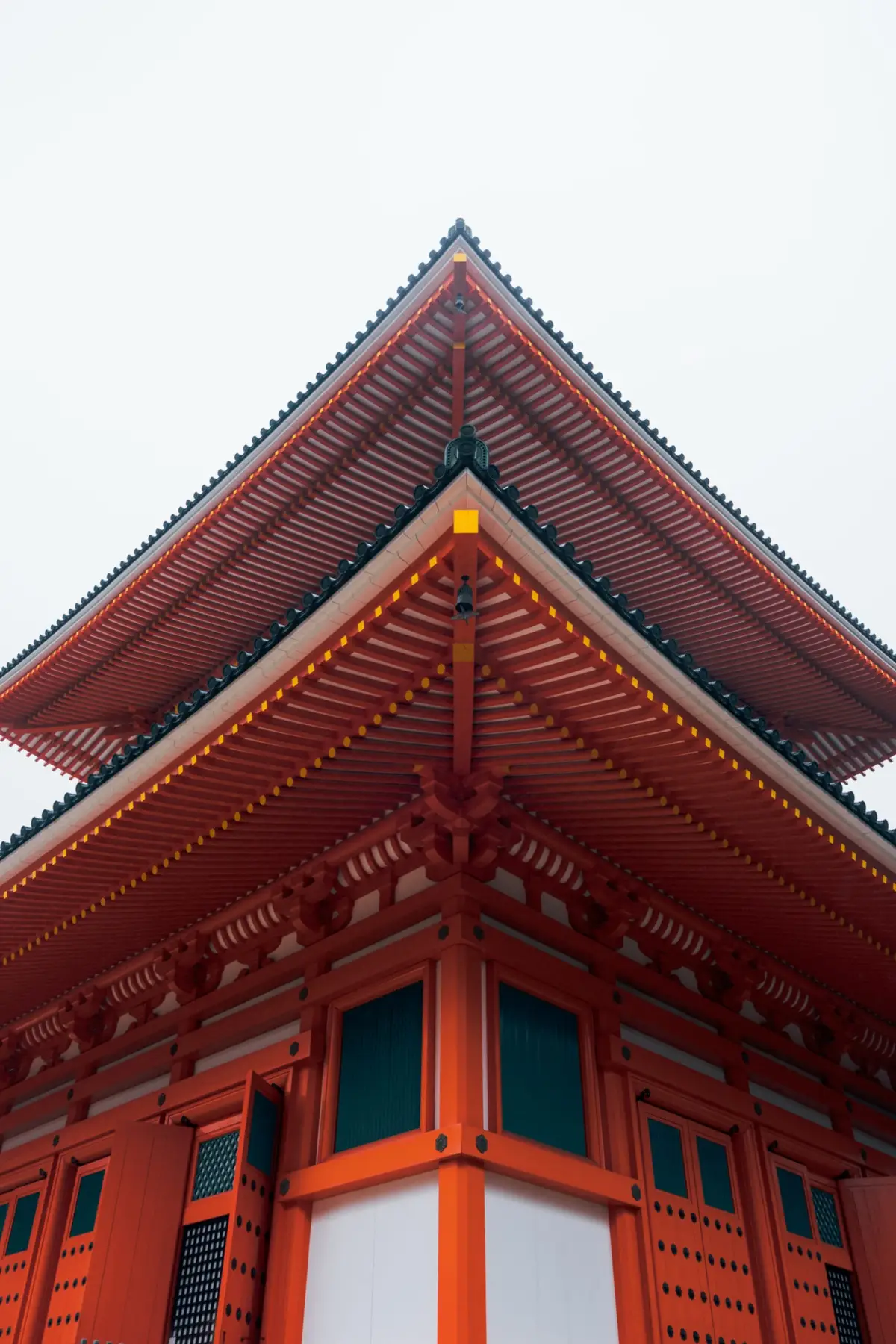
How to recognise them: at the entrance of a shrine there is a torii (鳥居), the wooden or stone gateway with two horizontal beams, often painted orange-red. It marks the passage from the everyday world to the sacred one, and before walking through it many people stop and bow their heads slightly. Buddhist temples instead have large entrance gates, sometimes with guardian statues, incense burners and, in some cases, a pagoda, the tower of three or five storeys that descends from the Indian stupa.
The torii appears in Japanese texts from at least 922. There is no agreement on the origin of the word: one hypothesis derives it from tōri-iru, "to pass through and enter". The Fushimi Inari shrine, in Kyoto, has thousands of them. Each one is the gift of someone whose business went well, and bears their name.
For centuries they were the same thing
The clear-cut distinction I have just given you is younger than it seems. Until 1868 kami and buddhas lived side by side in the same precincts, sometimes in the same buildings, and the kami were read as manifestations of the buddhas.
Then the new Meiji government ordered their separation, the shinbutsu bunri (神仏分離). It was a violent season: thousands of temples closed, monks forced to return to lay life, statues and books destroyed, bronze bells melted down to make cannons. By 1873 the drive had already run out of steam, and the separation has never been complete.
I say this because on the ground the torii rule has its exceptions. Many Buddhist temples still house a small shrine dedicated to the kami that protects them, with its own gateway. Shitennō-ji in Osaka, founded in 593, has a torii at one of its entrances. If you find one inside a temple you haven't taken a wrong turn.
Purification at the fountain
At the entrance of shrines (and of many temples) there's a covered fountain with ladles, the chōzuya or temizuya (手水舎). It's for purifying yourself before praying. The order is:
- Take the ladle in your right hand, fill it and pour a little water over your left hand.
- Switch the ladle to your left hand and wash your right.
- Take the ladle in your right hand again, pour a little water into your cupped left hand and rinse your mouth. Never drink straight from the ladle.
- Wash your left hand again, then hold the ladle upright so the water runs down the handle and cleans it.
Two details that Jinja Honchō adds: the water from your mouth is spat out at the foot of the fountain, never into the basin, and at the end the ladle goes back where you found it.
The gesture has a mythical origin. In the Kojiki the god Izanagi returns from a journey to the land of the dead and purifies himself by bathing in the sea. Washing your hands is the reduced version of that bath.
Don't expect to find ladles every time. With the pandemic many shrines removed them, together with the instructions for the mouth, and replaced them with a trickle of running water or with hand sanitiser. In others the basin is full of flowers: this is hanachōzu, a custom that started in 2017 at one temple, Yōkoku-ji, and by 2022 had reached two or three hundred places of worship. Besides, japan-guide observes, quite a few visitors skip rinsing the mouth or the whole rite. Watch what the person ahead of you does and do the same.
How to pray
At a shrine the most common rule is two bows, two claps, one bow:
- If you like, drop a coin in the offering box and ring the bell.
- Two deep bows.
- Two claps.
- A silent prayer, with your hands together.
- One last bow.
There is no right amount for the coin, the association itself says so. Many people choose the five-yen coin because of a play on words: go-en (五円) sounds like go-en (御縁), the bond between people. The sound of the bell, it is said, purifies whoever rings it.
Some large shrines have their own traditions (in some cases there are four claps): if there's a sign, follow it. The best-known case is Izumo Ōyashiro, one of the oldest shrines in the country. On its website it explains that the correct form there is two bows, four claps, one bow. At the main festival, on 14 May, there are eight claps, a number that since ancient times has stood for infinity. On other days they do half.
At a Buddhist temple you don't clap. You bow, join your palms in front of your chest in silence and bow again at the end. If there's an incense burner, many people bring the smoke towards themselves with their hands, as if "washing" in it: some waft it towards their shoulder, if it is the shoulder that hurts. If you light a stick, you put the flame out by waving your hand, without blowing.
The small rules
- Under the torii, walk to one side: according to tradition, the centre of the path is reserved for the kami.
- Shoes: if you enter a building with a raised floor, take them off.
- Photos: taking pictures inside the halls is often forbidden. Where there's a sign, respect it, and never photograph people while they pray. At Meiji Jingū in Tokyo, for example, photos and videos are forbidden right in front of the main sanctuary.
- Your voice: keep it low. These are places of worship before they are attractions.
- Greeting first, then the tour: Jinja Honchō asks you to pay your respects to the kami as soon as you arrive and not to stand around in front of the prayer hall, nor sit on the steps.
- Open doors are not an invitation. At a shrine you pray from outside, and you enter the buildings only if someone lets you in.
- Amulets, the omamori, are sacred objects and not souvenirs to those who give them. You keep them with you or give them to someone dear.
- Cash: most shrines don't accept cards, and entry is usually free. Keep a few coins in your pocket.
A pavilion that burns
A date reminds us that these places are not stage sets. At half past two in the morning on 2 July 1950, in Kyoto, a 22-year-old novice set fire to the Golden Pavilion of Kinkaku-ji. What you photograph today is the 1955 reconstruction. Six years after the fire Mishima Yukio made a novel of it, The Temple of the Golden Pavilion. If you go to Kyoto, it is a good book to put in your suitcase.
Can I clap too?
It is the question I ask myself every time I read instructions like these: is repeating a gesture of prayer that isn't mine respect, or is it play-acting? I found the most convincing answer on that same page of questions. There are no restrictions for those of another faith or of none, writes Jinja Honchō. It only asks you to maintain the dignity of the place and to address the kami politely and sincerely.
That is enough for me. Two bows and two claps make nobody a Shintoist, and nobody demands it. They give travellers something to do with their hands other than taking a photo, and that already seems to me another way of being in a place.
For more of the country's unwritten rules, read the train that apologises for 20 seconds. And if in a museum you stop in front of a cup repaired with gold, its story is that of kintsugi.
Questions and answers
What's the difference between a shrine and a temple in Japan?
A shrine (jinja) is Shinto, a temple (tera) is Buddhist. You recognise a shrine by its torii, the gateway at the entrance; a temple often has a gate with guardian statues, incense and sometimes a pagoda.
Do you clap your hands at Japanese temples?
No. You only clap at Shinto shrines (two bows, two claps, one bow). At Buddhist temples you join your palms in front of your chest and pray in silence.
sources
- Visiting a temple or shrine in Japan, japan-guide.com
- Shinto Shrines, japan-guide.com
- Japanese Temples, japan-guide.com
- Torii, Wikipedia
- Chōzuya, Wikipedia
- Q&A, Jinja Honchō (Association of Shinto Shrines)
- Entering a Jinja, Jinja Honchō (Association of Shinto Shrines)
- Temizuya, Jinja Honchō (Association of Shinto Shrines)
- Frequently asked questions (よくあるご質問), Izumo Ōyashiro shrine
- Etiquette, Meiji Jingū shrine
- Shinbutsu bunri, Wikipedia
- Buddhism in Japan, Wikipedia
- Saisen, Wikipedia
- Kinkaku-ji, Wikipedia