
The izakaya: how the Japanese tavern works (and why you pay for a dish you didn't order)
The red lantern outside, the hot towel, the little dish that arrives without being ordered and ends up on the bill. What an izakaya is, how to order and the rules worth knowing before you walk in.
by Aniello Iervolino 6 min read
In the Edo of the Tokugawa, the city now called Tokyo, certain sake shops hung a sheet outside that read 居酒致し候. More or less, "here you can stay and drink". Sake was sold by measure, to take away. Anyone who put up that notice was announcing that at his shop you could empty your cup on the spot.
The izakaya (居酒屋) is the Japanese tavern: an informal place where you go to drink and order lots of small dishes to share. The word means, literally, "sake shop where you stay". It is made up of i, from iru, "to stay", and sakaya, "sake shop", and comes from those shops with the notice.
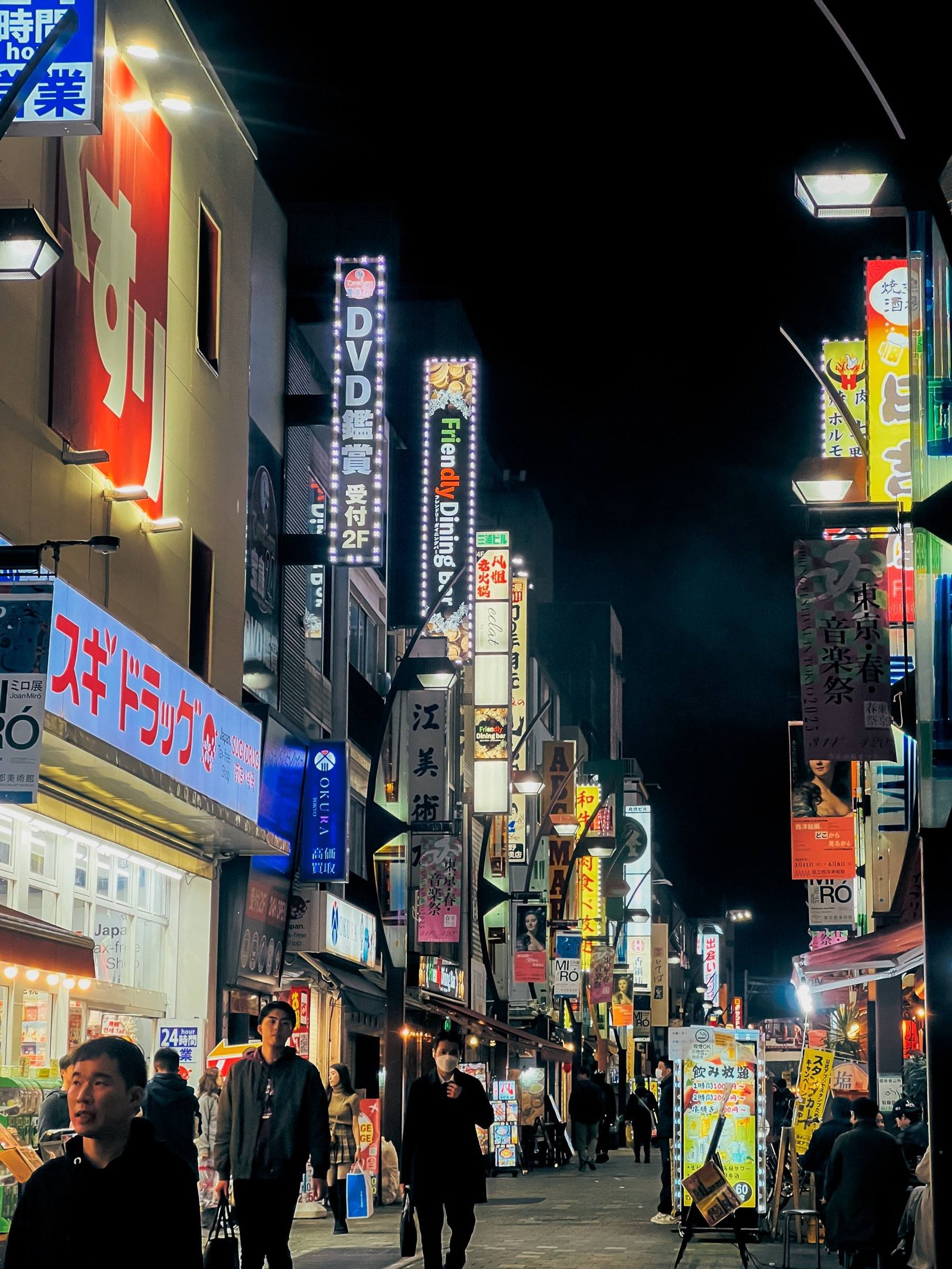
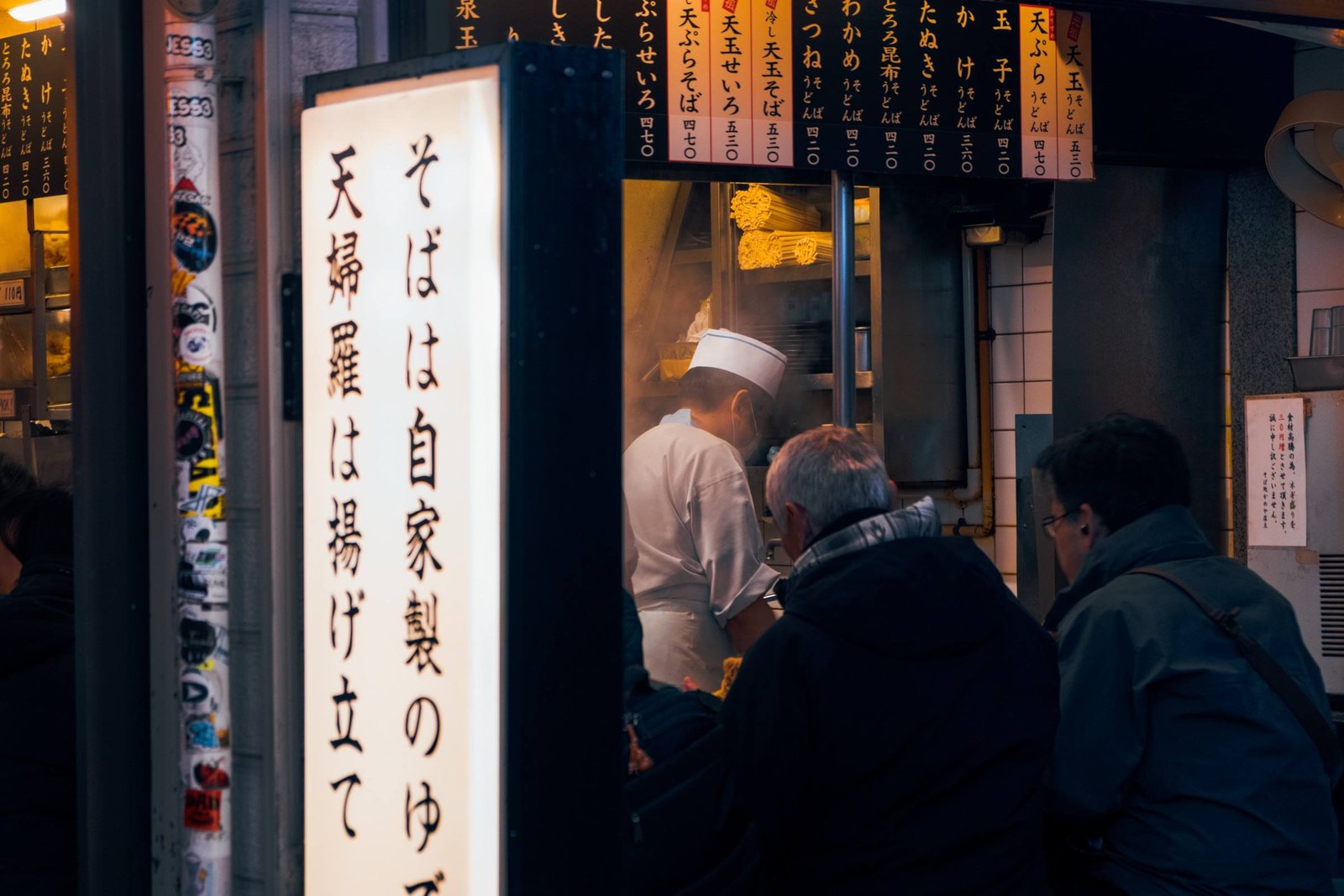
In Japan, in the evening, life is in the izakaya more than in the elegant restaurants: small places with a counter, an open kitchen, smoke from the grill, office workers in jackets and ties sitting next to students. People drink, eat and talk loudly.
Barrels for stools
At first people drank standing up. Then some shopkeepers began to use sake barrels as stools and to offer something to nibble on, the sakana (肴), the snacks that still go with alcohol today.
The success has a demographic explanation. In Edo there were far more men than women, and many lived alone: a place to drink and eat something without cooking suited half the city. In the years between 1818 and 1830, according to the Japanese Wikipedia entry, there were more than 1,800 izakaya in Edo. Sake was drunk warm all year round.
Since then the izakaya has followed the country. In 1944, in the middle of the war, the "people's izakaya" appeared, publicly run and rationed: one bottle of beer or one measure of sake each. In 1962 an izakaya in Tokyo ended up in newspapers around the world because Robert Kennedy had dined there with trade unionists. Until the 1970s the image was that of the office worker drinking sake after work. From the 1980s came the chains, the cocktails, the groups of women friends, the families.
How to recognise one
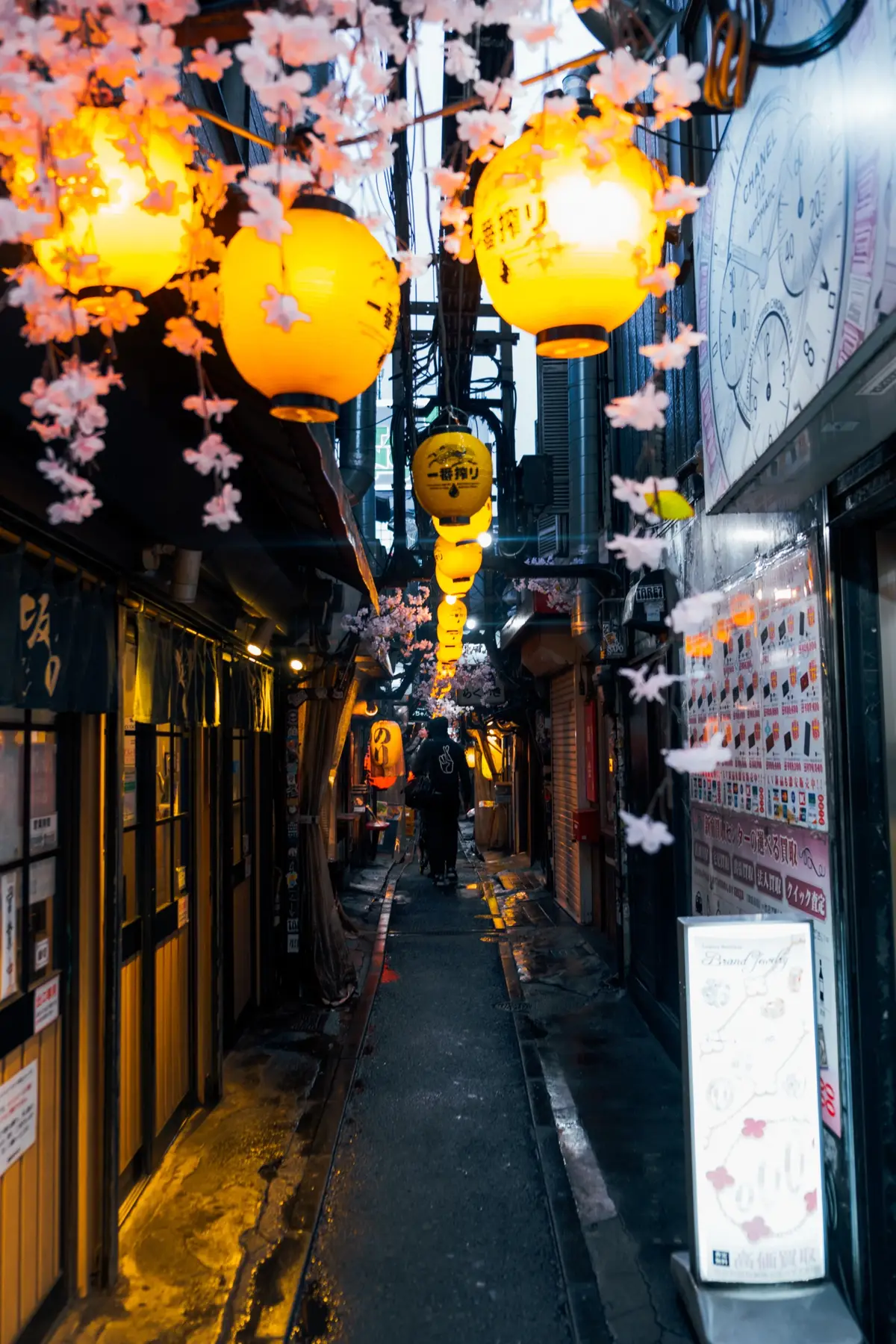
Outside the door there is often a red paper lantern, an akachōchin (赤提灯). It is the traditional sign of an izakaya, especially the simpler and cheaper ones. So much so that akachōchin has become almost a synonym, and today it usually refers to the small places outside the chains.
What happens when you walk in
- The towel. You are given an oshibori, a small damp towel, hot in winter and cool in summer. It's for your hands, not your face (although some people use it that way). The name comes from the verb shiboru, "to wring", and the custom is old: it was offered to visitors as early as the Heian period, and in the Edo period you found it in inns. Since 2004 it has even had its own day, 29 October.
- The little dish. Shortly afterwards an appetiser you didn't order arrives: pickled vegetables, edamame, a bit of fish. It's the otoshi, which in western Japan is also called tsukidashi. It looks like a gift and works as a cover charge: you'll find it on the bill, usually per person.
- Drinks. You almost always start by ordering drinks, all together. You toast with kanpai (乾杯), literally "empty the glass", before the first sip.
The dish you didn't order
The otoshi is worth dwelling on, because it is the point at which the traveller feels cheated. Those who come from Italy start with an advantage: we know the coperto, the cover charge, very well, and here at least it comes with something to eat.
The explanation given in Japan is practical. The little dish covers the wait between the first order and the arrival of the real dishes. It is usually something prepared in advance: edamame, or the fish that was sashimi yesterday and has been simmered today. For the place it is also a guaranteed takings on every customer.
Something is changing here too. To avoid arguments some places write it on the menu. Some big chains have turned it into a selling point in reverse: at Torikizoku the otoshi does not exist, at Watami they don't bring it to anyone who doesn't want it. Where it is declared, in the chains, the figure is around 300 yen per person. In small places there is no single price: if the bill worries you, ask before you sit down.
There is also a curiosity that amuses me. In Kantō, the Tokyo region, they say otōshi, which carries the idea of "letting through". In Kansai, the Osaka region, they say tsukidashi, "pushing out". Two words that go in opposite directions and arrive at the same little dish.
A beer to start with
The phrase you will hear most often at the start of the evening is toriaezu bīru, "a beer to start with". It is a recent habit. It spread around 1955, in the years of the economic boom, when beer became a drink for everyone. It had one advantage over warm sake: it arrived straight away, so the first toast could be made without waiting.
Today the habit is creaking. Demand for beer in Japan peaked in 1994, and among younger people some experience that "a beer to start with" as an imposition on those who would like something else. Order what you prefer. The important thing is to have something in your glass at the moment of the kanpai.
How to order
There are no courses. You order lots of small dishes to share, a few at a time, as you get hungry: grilled skewers (yakitori), raw fish, tofu, vegetables, fried food. Many places have menus with photos or a tablet at the table. To call the staff you raise your hand and say sumimasen.
A rough order does exist. You start with the things that arrive quickly, such as edamame or cold tofu, move on to more robust flavours, the grill and the fried chicken, and finish with a rice or noodle dish called shime, the closing. Rice and alcohol together, by tradition, don't go: sake is made from rice and takes its place at the table.
Two formulas worth knowing. Nomihōdai is all you can drink at a fixed price, usually with a limit of two or three hours. Bottle keep is the bottle bought whole, usually shōchū or whisky, which the place stores for you until next time.
The useful rules
- The bill is paid at the till, on the way out. And no tip: in Japan you don't leave one, as we explain in the country's unwritten rules.
- Chopsticks are not stuck upright in the bowl of rice (it recalls a funeral rite, the incense offered to the dead), and food is not passed from chopstick to chopstick, another gesture that belongs to funerals.
- Smoking: in some places people still smoke. Since 1 April 2020 a national law has banned smoking indoors in bars and restaurants, outside dedicated smoking rooms, but it exempts small existing places, up to 100 square metres, provided they display a notice. The sign at the entrance is therefore compulsory: if smoke bothers you, look at it before you go in. In Tokyo and a few other prefectures the rules are stricter.
- Counter seats are the best if you're on your own: you watch the cooking, and you often end up talking to your neighbour.
The counter, seen from afar
Japan has told the story of that counter many times. In 1983 the director Furuhata Yasuo made a film of it, Izakaya Chōji, starring Takakura Ken, based on a novel by Yamaguchi Hitomi. More recently there is Midnight Diner, the series born from the manga by Abe Yarō: a diner in Shinjuku open from midnight to seven in the morning, a cook everyone calls "Master", and in every episode the lives of his customers.
In a place where elbows touch and the cook works a metre away from you, striking up a conversation is almost inevitable. For anyone who came to take photographs it's a risk, and I know how it ends: a lot of chatter, not a single photograph.
If you're in Osaka, before or after, stop by Dōtonbori.
Questions and answers
What is the otoshi in an izakaya?
It's a small appetiser served as soon as you sit down, without you ordering it: pickled vegetables, edamame, a bit of fish. It works as a cover charge and is added to the bill, usually per person.
How do you order in an izakaya?
You order a little at a time: drinks first, then a few dishes to share, then more. Many places have a menu with photos or a tablet; to call the staff you say "sumimasen".
sources
- Izakaya, Wikipedia
- 居酒屋 (Izakaya), Japanese Wikipedia
- Oshibori, Wikipedia
- Sakana, Wikipedia
- Toast (honor): toasts in various languages, Wikipedia
- とりあえずビール (Toriaezu bīru), Japanese Wikipedia
- Chopsticks: chopstick etiquette in Japan, Wikipedia
- Smoking in Japan, Wikipedia
- Website on passive smoking and the law in force since 1 April 2020, Ministry of Health, Labour and Welfare of Japan
- Izakaya Chōji (1983 film by Furuhata Yasuo), Wikipedia
- Midnight Diner (Shin'ya shokudō, TV series from the manga by Abe Yarō), Wikipedia