
Iceland in October: weather, light and what to photograph
How many hours of daylight there are, what the weather is like, which roads are open and why October is one of the best months for a photography trip to Iceland.
by Aniello Iervolino 7 min read
In short
- In October on Iceland's south coast daytime temperatures are generally between 0 and 8 degrees, but what matters most is the wind.
- At the start of the month there are about 11 hours of daylight, which shrink as the month goes on; the dark nights make the northern lights possible.
- The Ring Road is open unless there are storms: check road.is and safetravel.is every morning.
On 28 October 2025 the Reykjavík police asked everyone to take shelter by three in the afternoon. The biggest October snowfall in the city's history was coming down, the Met Office had issued an orange warning, the main arterial roads were blocked and flights from Keflavík were being cancelled or delayed. Most of the delays, the police said, were caused by ill-equipped vehicles, and the appeal was not to set out on summer tyres.
I start here because October in Iceland is often described as a gentle autumn, and it isn't always. Then there is the rest, which is just as true. October in Iceland is the month when the summer tourists have gone, the nights are dark again and the light, for much of the day, has the angle photographers wait for all year. Comfortable it has never been. It is still one of the most beautiful months.
The weather: be ready for anything
In October daytime temperatures on the south coast are generally between 0 and 8 degrees, lower in the north and at night. The figures from the Icelandic Meteorological Office help you get the measure of it: the October average for the thirty years 1991-2020 is about 4.8 degrees in Reykjavík and about 3.5 in Akureyri, in the north. These are averages, and individual years stray a long way from them. In October 2024 Reykjavík stopped at 3.3 degrees and Akureyri at 0.8: for the northern town it was the coldest October since 1981.
But in Iceland the temperature tells you little: what counts is the wind, which can turn 4 degrees into something that feels like deep winter, and the horizontal rain, a local speciality. A practical note: Icelandic forecasts and alerts give the wind in metres per second. To get kilometres per hour, multiply by 3.6. When SafeTravel, at the end of November 2026, was reporting winds of 15 to 25 metres per second across the whole island with gusts up to 35, it was talking about gusts of over 120 km/h.
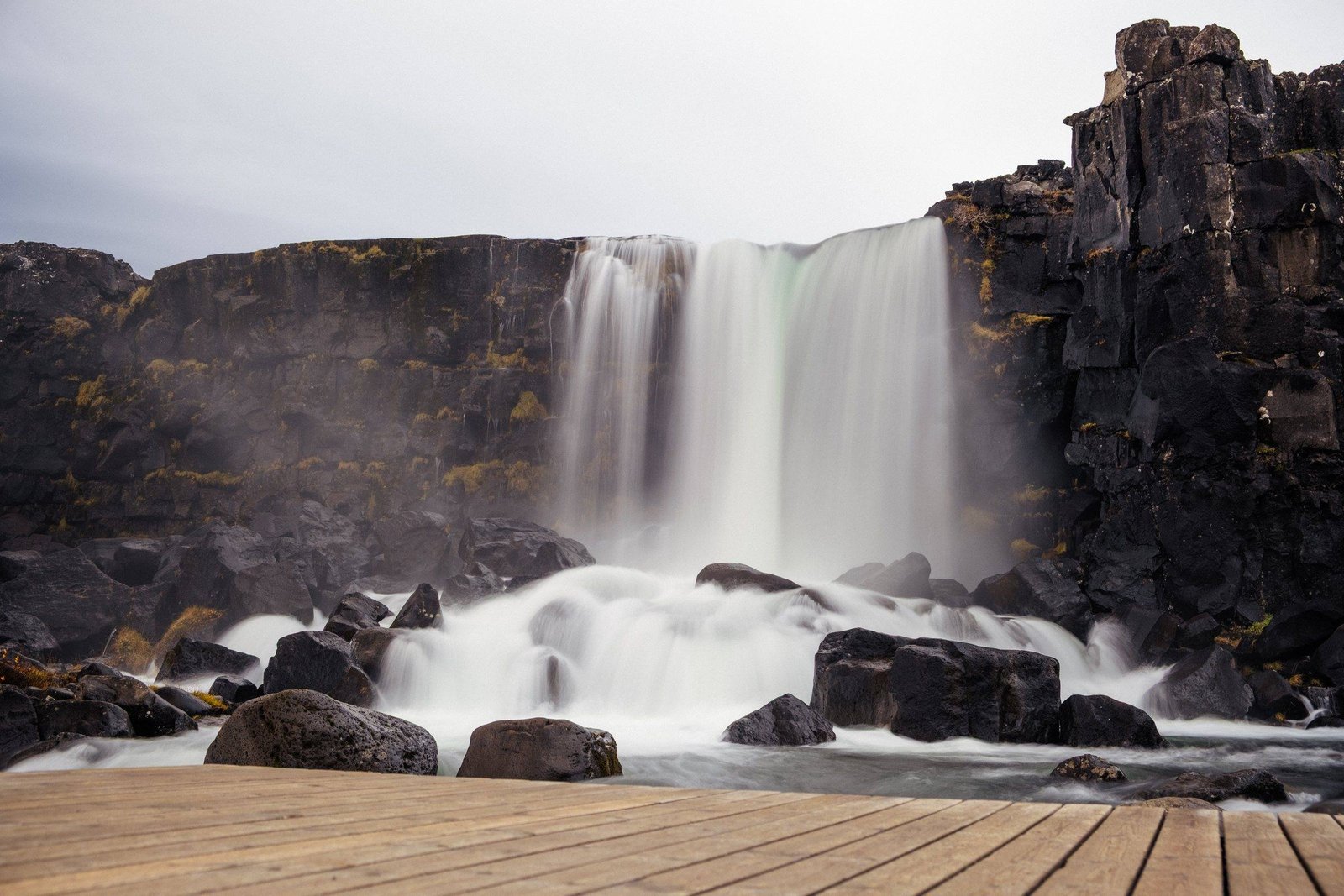
The weather changes fast, even several times a day. For a photographer that's wonderful news: clouds that open up, shafts of light on the mountains, rainbows over the waterfalls. The most dramatic photos almost always come with "bad" skies.
I have a certain fondness for experiences that, while you're living them, make you think better of the sofa at home. October in Iceland offers plenty, almost all of them with the wind in your face. It's worth knowing beforehand, so that on the spot you still feel like getting the camera out.
How many hours of daylight
- Early October: about 11 hours of daylight.
- Late October: about 8-9 hours.
In detail, for Reykjavík and for 2026:
| Day | Sunrise | Sunset | Hours of daylight | Height of the sun at solar noon |
|---|---|---|---|---|
| 1 October | 07:36 | 18:56 | 11 hours 20 minutes | 22.6° |
| 15 October | 08:17 | 18:07 | 9 hours 50 minutes | 17.3° |
| 31 October | 09:07 | 17:13 | 8 hours 6 minutes | 11.7° |
The day shortens by about six and a half minutes a day, three quarters of an hour a week. Leaving on the 5th or on the 25th of the month changes the trip: in the second case you have over two hours less light for photographing and for driving.
The last column explains the rest. The sun stays low on the horizon and the light remains warm and raking for hours, well beyond the usual twenty minutes of golden hour. Sunrise and sunset fall at civilised times: you don't have to get up at 3 like in June. Just bear in mind that in Iceland the clock runs ahead of the sun: in mid-October solar noon, in Reykjavík, comes at 1.13 pm.
There is also a calendar older than ours that says the same thing. The old Norse calendar knew only two seasons, summer and winter, and winter begins with vetrardagur fyrsti, the first day of winter, which generally falls on the last Saturday of October: in 2024 it was the 26th. According to folk tradition the weather on that day tells you what the season will be like: if it freezes, the winter will be mild. Anyone travelling at the end of the month, for the Icelanders of old, is already in winter.
The northern lights
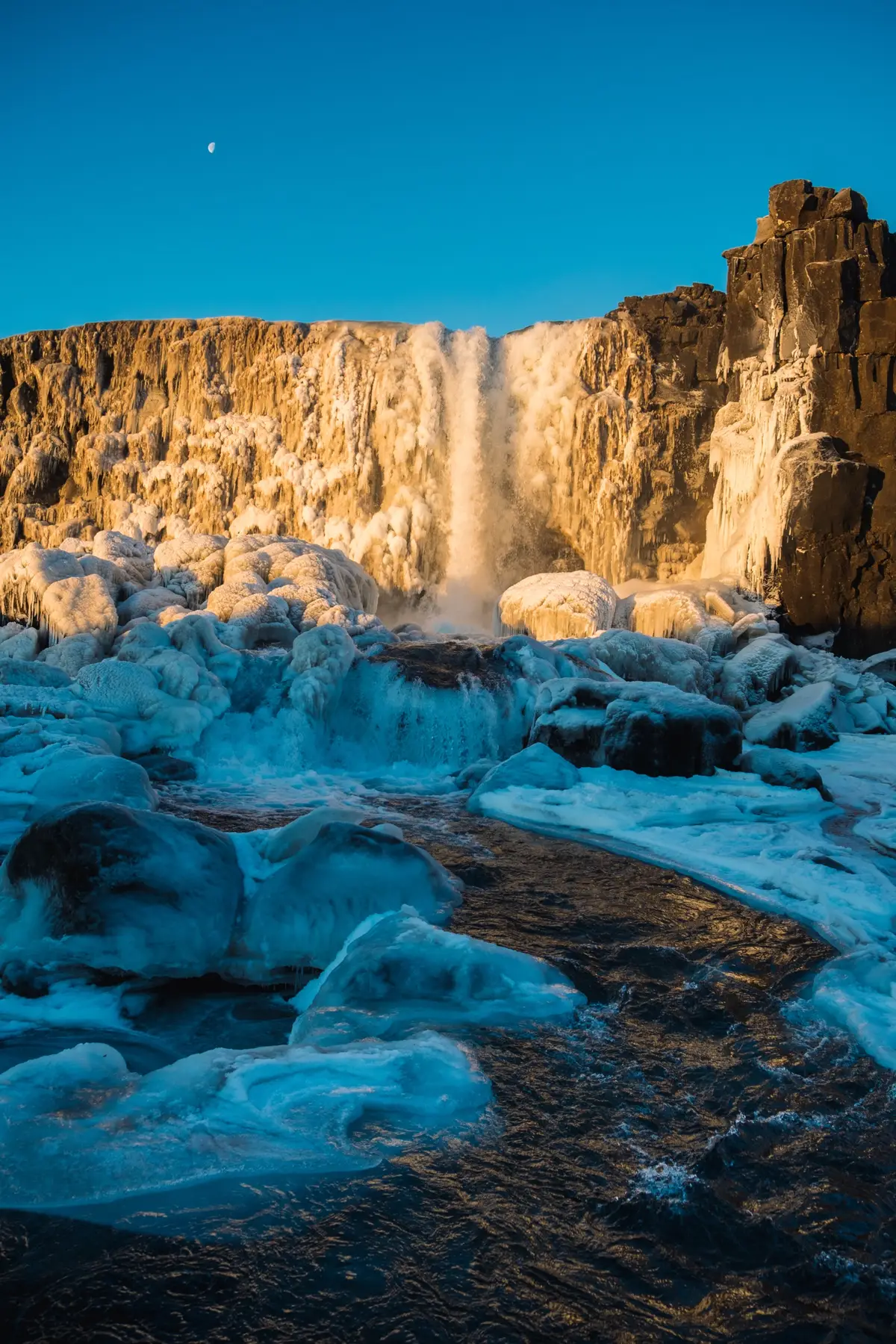
October is in the middle of the season: the nights are dark and geomagnetic activity around the autumn equinox tends to be favourable. You need a clear sky and a bit of patience. You'll find everything in the guide on when and where to see the northern lights in Iceland and on how to photograph them.
One recommendation SafeTravel repeats to anyone going out at night: you leave the car in a car park, never on the carriageway or the verge, and you dress in layers, because dark, clear nights are often cold.
From 9 October, in the sky over Reykjavík, there is another light as well. It is the Imagine Peace Tower, the column of light that commemorates John Lennon: it is lit on the island of Viðey on his birthday and stays on until 8 December, the day he was killed in 1980. For the evening of the lighting there is also a boat trip out to the island.
Roads and getting around
- The Ring Road is open, barring storms: check road.is and the alerts on safetravel.is every morning.
- The F roads in the highlands generally close between September and October. Don't count on them.
- Shorter days call for a more compact itinerary: fewer kilometres, more time in each place.
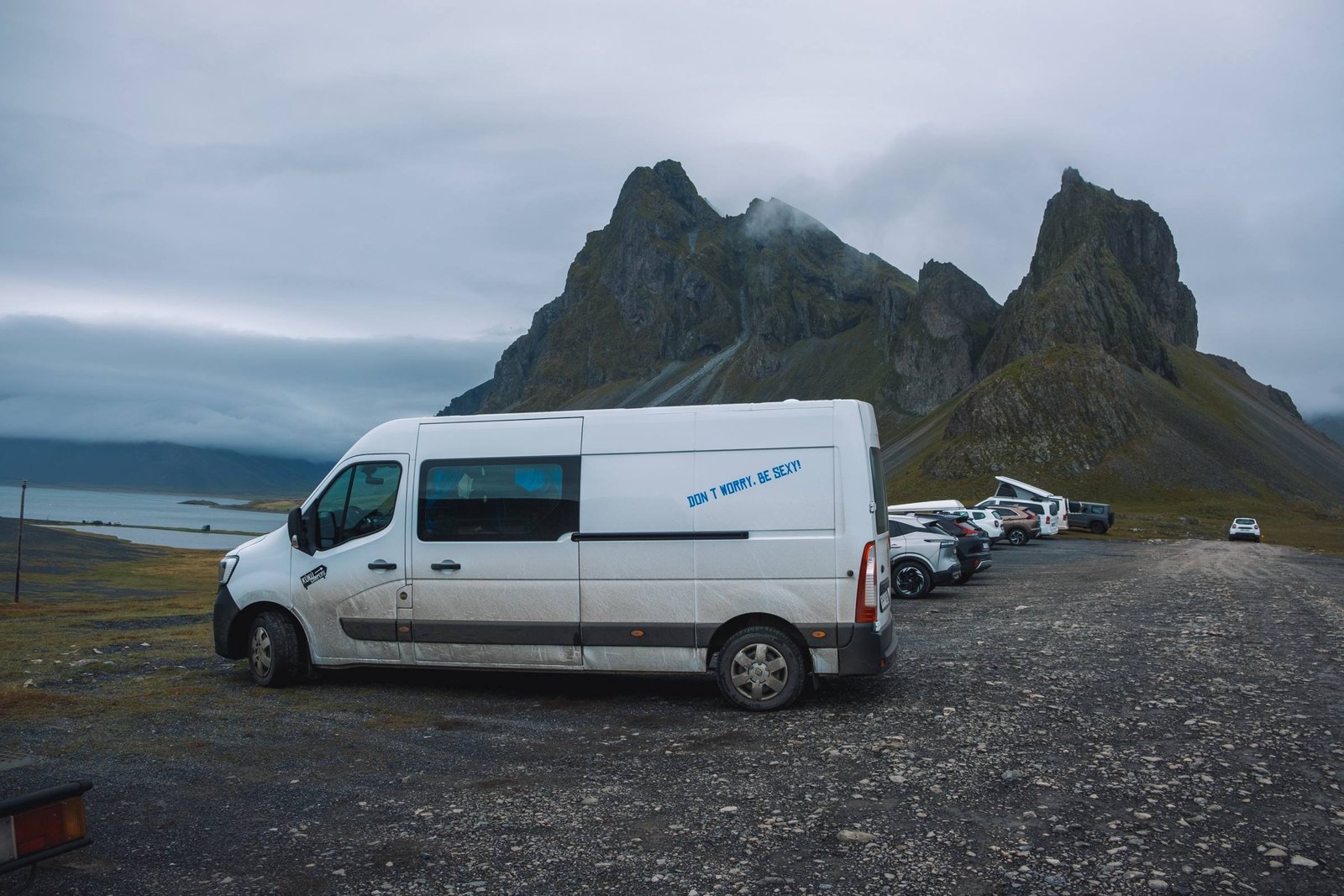
In practice, with nine or ten hours of light it pays to keep the driving inside the day and leave to the night only the wait for the aurora, close to where you're sleeping.
With the F roads it's worth understanding why. The Icelandic road administration describes them as mountain roads open only a couple of months a year, almost always with at least one river to ford. The dates aren't fixed: it is mostly the snow that decides. To give an idea of the other end of the season, between 2021 and 2025 the track to Landmannalaugar opened on average on 2 June and the Sprengisandur on 6 July. Off-road driving in the highlands is forbidden and punished.
The conditions of each stretch can be checked on road.is or by phone, on 1777, staffed 24 hours a day. Then there is the question of tyres, which the 2025 snowfall made obvious. In Reykjavík studded tyres are allowed from 1 November to 15 April, as the city council points out, while advising against them. In October, then, don't take for granted how your hire car will be equipped: ask when you book, especially if you're travelling in the last part of the month or if your loop goes through the north.
If you're planning, have a look at our photography itinerary on the Ring Road.
What to photograph in Iceland in October
- Waterfalls with fewer people and spray full of light: Seljalandsfoss, Skógafoss, Dettifoss, Goðafoss. Read the guide on how to photograph waterfalls.
- Moss and hills turning red, ochre and brown.
- Icebergs at Jökulsárlón and on Diamond Beach, with the low light shining through them.
- The black beaches of Reynisfjara and Stokksnes, with the autumn sea meaning business.
- The night sky, when the aurora decides to show up.
On the black beaches "meaning business" should be taken literally. At Reynisfjara the danger is sneaker waves, waves that arrive without warning in the middle of quiet ones, climb much higher than the others and can drag an adult out to sea in a few seconds. At the entrance to the beach there are signs and a three-level warning light: yellow, be alert; orange, at least 25 metres from the water; red, beach closed, you watch from the viewing area. SafeTravel writes it without mincing words: people have died here. There is one rule, and it is worth more than any frame: never turn your back on the sea.
For everything else, October rewards those who stop. With the sun seventeen degrees above the horizon even two in the afternoon has long shadows, and a place seen in the morning under the rain can be unrecognisable three hours later.
What to pack
Technical layers, waterproof jacket and trousers, waterproof boots, gloves (two pairs is better), hat and neck warmer. For the photography side you'll find the complete travel gear checklist.
The principle is layers: you take them off in the car and put them back on at every stop, and on an October day there are a lot of stops. As for the gloves, a thin pair is for working the dials and a heavy one for keeping your hands alive while you wait.
Why we chose October
It's for this balance that we chose mid-October for our photography expedition to Iceland: enough light to photograph the landscape, enough darkness for the aurora.
Frequently asked questions
What's the weather like in Iceland in October?
Cool and changeable: in the daytime generally between 0 and 8 degrees on the south coast, colder in the north and at night. Wind and rain are frequent, the first snowfalls are possible.
How many hours of daylight are there in Iceland in October?
About 11 hours at the start of the month, about 8-9 at the end. The light stays low and raking for much of the day.
Can you see the northern lights in Iceland in October?
Yes, October is in the middle of the aurora season: the nights are dark and geomagnetic activity around the equinox is often favourable. You do need a clear sky, though.
Are the roads open in October?
The Ring Road is, barring bad weather. The F roads in the highlands generally close between September and October: always check road.is.
sources
- Weather forecasts, Icelandic Meteorological Office (Veðurstofa Íslands)
- Aurora forecast, Icelandic Meteorological Office (Veðurstofa Íslands)
- Road conditions, Vegagerðin (Icelandic Road Administration)
- SafeTravel Iceland, alerts and travel safety
- Iceland, Viaggiare Sicuri (Italian Ministry of Foreign Affairs, in Italian)
- Police Urge Public To Seek Shelter As First Snow Falls In Reykjavík, The Reykjavík Grapevine, 28 October 2025
- The weather in Iceland in October 2024, monthly report of the Icelandic Meteorological Office (NOAA NCEI copy)
- Sunrise and sunset in Reykjavík, October 2026, timeanddate.com
- First day of winter, Visit Akureyri, 28 October 2024
- Lighting of Imagine Peace Tower, City of Reykjavík
- The Icelandic Highland Interior, Vegagerðin
- Opening of mountain roads, Vegagerðin
- Studded tires, City of Reykjavík
- Black Beach Safety, SafeTravel Iceland
- Northern Lights Safety, SafeTravel Iceland