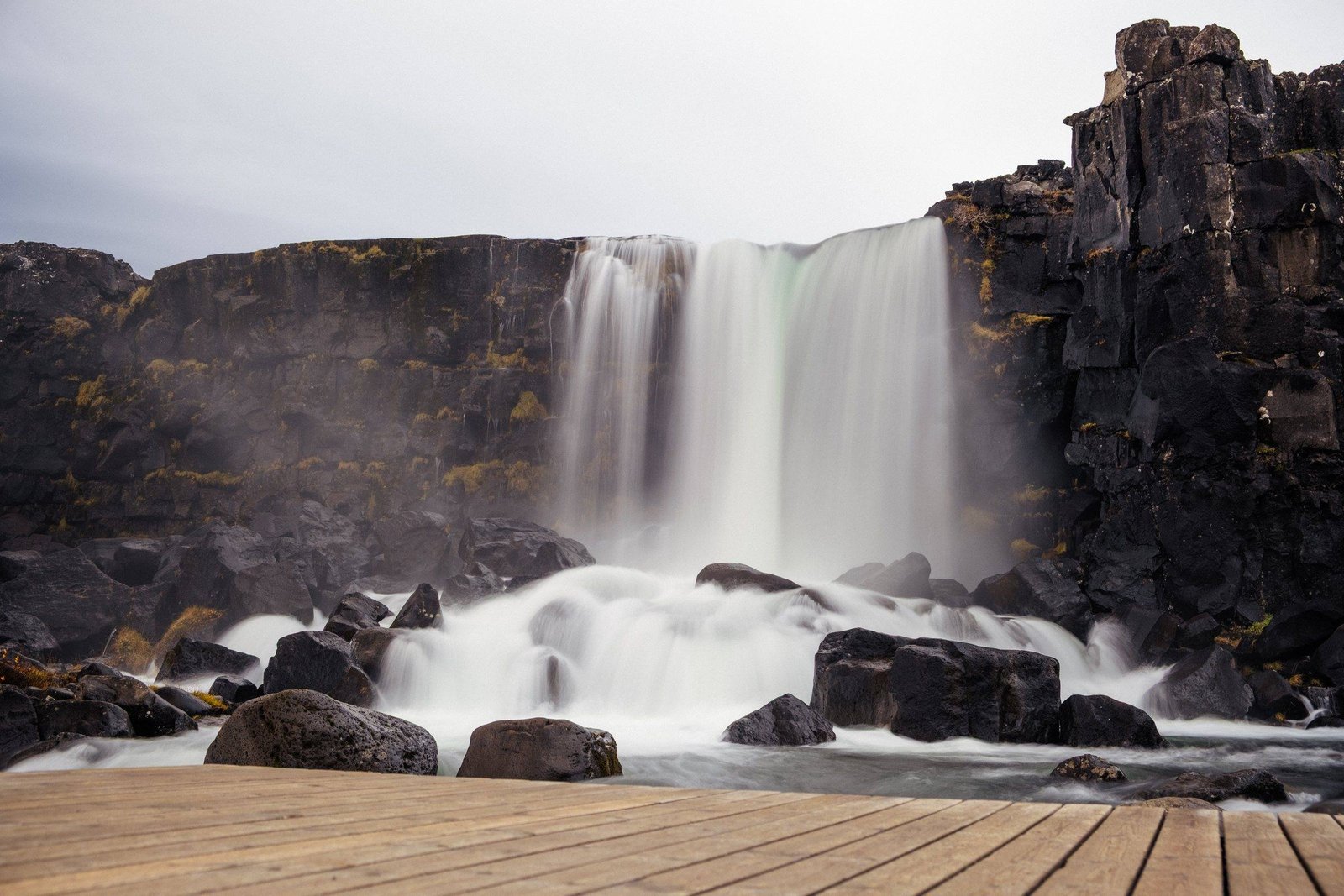

A chest of gold under Skógafoss and a button that came home: the waterfalls of south Iceland
Under Skógafoss, the legend says, there is a chest of gold, and of that chest a ring remains. In the Skógar museum, next to the ring, there is another chest: that of four men who set out in October 1868 and never arrived.
by Aniello Iervolino 8 min read
In the Skógar museum, in the south of Iceland, there is a ring that spent a long time on a church door. First on the door at Skógar, until that church was taken out of use in 1890. Then on the one at Eyvindarhólar, where it stayed until a new church was built, in 1961. Since then it has been in the museum, which has also put it in its logo.
According to the legend, that ring comes from a chest full of gold that still lies under Skógafoss.
Þrasi's chest
The story begins in the Landnámabók, the thirteenth-century book that tells who settled Iceland and where. At Skógar lived a settler called Þrasi Þórólfsson, and the book describes him as a powerful sorcerer. Once there was a great flood on the nearby glacial river. Þrasi, with his arts, pushed it east, towards the land of another sorcerer, Loðmundur. Loðmundur sent it back west. They went on like this until they chose a gorge near the coast, and that river, the Jökulsá, still marks the border between two quarters of Iceland. The Skógar museum explains that the tale is based on an eruption under Mýrdalsjökull, shortly after the first settlers arrived.
The chest comes later. Jón Árnason, who between 1862 and 1864 published the legends and folk tales of Iceland, added that Þrasi had hidden his treasure under the waterfall, and that once part of the chest could be seen. Around 1600 three men tried to take it. The first time they saw their farmhouse on fire and ran home: nothing was burning. They went back, managed to hook a ring on the chest and pulled. The ring came off, and there was no other way to reach the chest. The Environment Agency of Iceland, in its page on Skógafoss, tells the same story with the same ending: the ring on the church door is believed to come from there.
I like that what remains of a legendary treasure is the ring from a church door, something that passed through the hands of everyone who went in.
Sixty metres of water on the old coastline
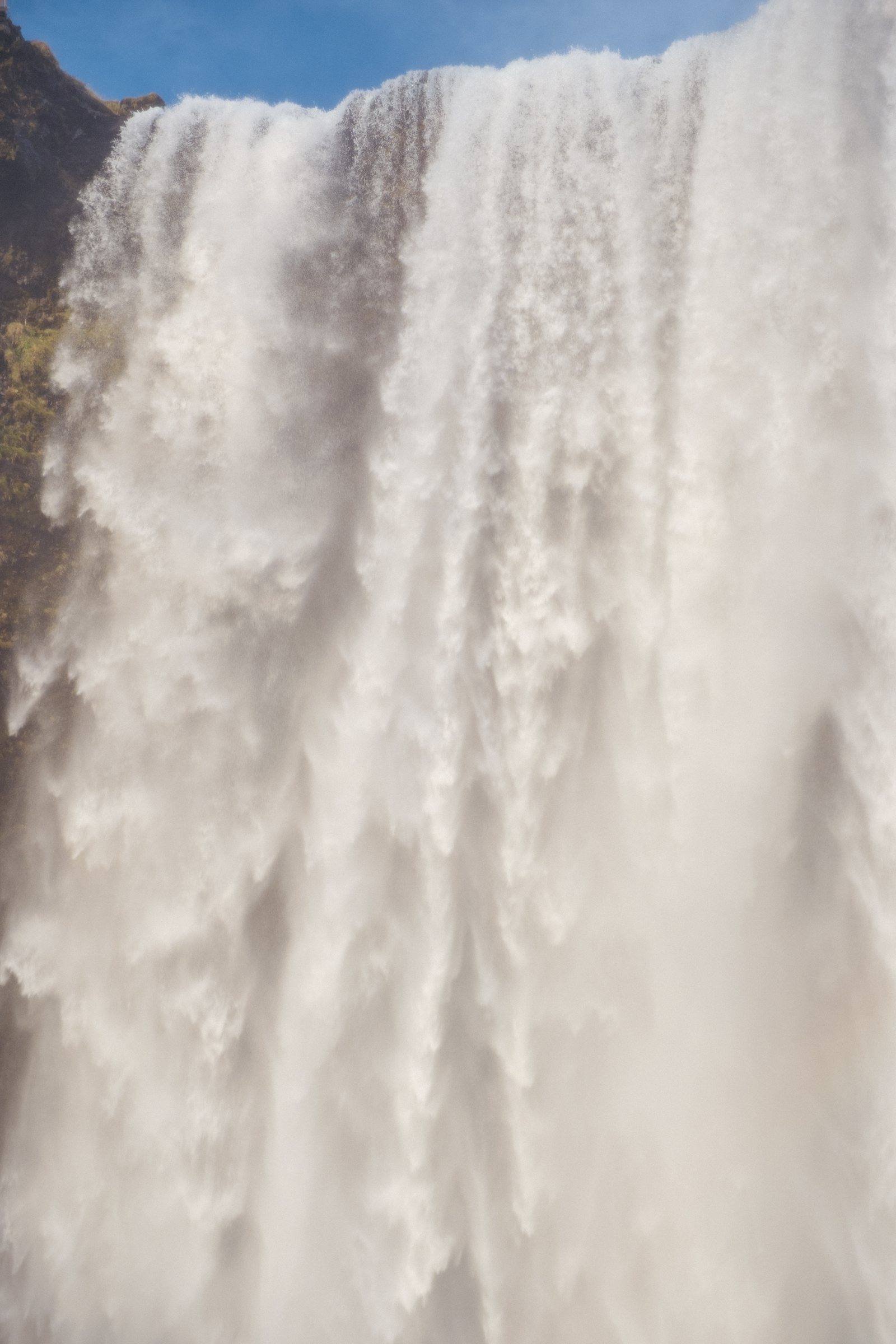
Skógafoss falls 60 metres and is 25 wide. The step it leaps from used to be the coastline: the sea is now about five kilometres away. In sunshine the spray almost always lights one or two rainbows. On the right-hand side a staircase of 527 steps leads to the top, and from there the trail heads north. The waterfall has appeared in films, series and music videos, from Thor: The Dark World to The Secret Life of Walter Mitty.
We took the photos in this article in October 2026, and we passed by Skógafoss and Seljalandsfoss. The cover shot is a detail of the falling water, so close that the edge of the rock almost disappears and only white water is left.
The man who kept things
Þórður Tómasson was born in 1921 at Vallnatún, in the south of Iceland. As a boy he began collecting old objects from the area around him, things that, the museum writes, his contemporaries considered outdated and worthless.
The museum opened on 1 December 1949, inside the Skógar school, on his initiative. He looked after it from the first day until 2013, when he was 92. Today there are about eighteen thousand objects: haymaking tools, riding gear, embroidery, weaving, household utensils. At the centre of the fisheries section is the Pétursey, an eight-oared boat built in 1855 and used until 1946: the south coast had no harbours, and boats were pushed out to sea straight from the beach, against the Atlantic waves. Þórður wrote many books on Icelandic folk culture, played the organ in two churches, and in 1997 the University of Iceland gave him an honorary doctorate. For more than sixty years he welcomed the visitors himself. Usually, the museum says, he ended the visit singing and playing the harmonium.
He died on 27 January 2022.
It strikes me that he spent his life giving value to what others found old. It is an attention I would like to have when I travel too, for the small things that never end up on any list of places to see.
The other chest
In the Skógar museum, besides Þrasi's ring, there is another chest. It has the number S-2242, it is made of wood, and it has been reconstructed from fragments. It was a chest for fishermen's rations: it held the food for the whole fishing season.
In October 1868 four men set off on horseback from the farm of Gröf for the winter fishing season in Suðurnes: a journey of more than 260 kilometres. They left despite signs of bad weather. Their names were Þorlákur Jónsson, 44, Árni Jónsson, 52, Jón Runólfsson, 32, and Davíð Jónsson, who was 17. They never arrived. They died of exposure on Mælifellssandur, the sand plain north of the Mýrdalsjökull glacier.
Their bodies lay there for ten years. They were found in 1878 by farmers looking for sheep. Their belongings had been preserved well enough for each of them to be identified, but the remains were all put into a single sack and buried in one coffin in the churchyard at Ása, to the displeasure of their families and neighbours. Luggage, clothes and belongings were left on the sand. For ninety years people passing by picked some of them up, and those pieces, one at a time, reached the museum. The pieces of the chest too.
The museum also has a velvet belt embroidered with silver, number S-540. It belonged to Kristín Símonardóttir, of Gröf, Þorlákur's wife. Sewn next to the buckle is a silver button with a number of its own, S-541. It came from the coat Þorlákur was wearing when he died on the sand, and it found its way back to Kristín after her husband's body was found. A granddaughter sewed it onto her grandmother's belt before donating it to the museum.
A chest of gold that nobody has ever seen and a chest of rations that nobody ever opened at its destination. A legend left a ring, four men left a button. Both have come down to us because someone, at some point, decided not to throw them away.
The pass above the waterfall
The trail that starts at the top of Skógafoss climbs the Skógá river, passes dozens of other waterfalls and crosses the Fimmvörðuháls pass, between the Eyjafjallajökull and Mýrdalsjökull glaciers, before descending to Þórsmörk. It is between 22 and 25 kilometres, depending on the source, with about a thousand metres of ascent. On the night of 16 May 1970 three travellers died up there in a snowstorm. Along the trail, writes the Iceland Touring Association, a cairn remembers them.
There is also new lava on the pass. On 20 March 2010, at about eleven at night, the ground opened right there. It was the beginning of the Eyjafjallajökull eruption. The two new craters were named Magni and Móði, after the sons of Thor, and the lava field Goðahraun. On 14 April the eruption moved under the glacier and became explosive. The ash closed much of Europe's skies from 15 to 20 April, and about ten million travellers were left on the ground.
The farm under the volcano
Below the southern side of the Eyjafjöll mountains lies the farm of Þorvaldseyri. In the spring of 2010 it was evacuated three times: on 20 March, on 14 April because of the risk of glacial floods, and on 16 April because of the ash, until the 20th. The cows still had to be milked. During breaks in the ashfall people could go back for a few hours, feed the animals and leave again. Rescue teams helped in the fields and swept ash off the roofs. Doors and windows were sealed, but the ash was so fine it got in almost everywhere.
The farmer is called Ólafur Eggertsson. He told a journalist from AAP that in broad daylight it was as dark as in winter. To another, Lesley Bellew, he said: "We wondered if this was the end of the farm and whether we would recover from this disaster." They could not take the cows away. The house was spared. For months family, friends and neighbours cleared the ash, and in the years that followed, the Katla Geopark panels say, that same ash worked as fertiliser on the fields. Because people kept stopping outside their home, the family opened a small museum about the eruption across the road. In 2014, 74,000 people came through. "This volcanic eruption affected so many people," said Guðný Valberg.
Behind the water
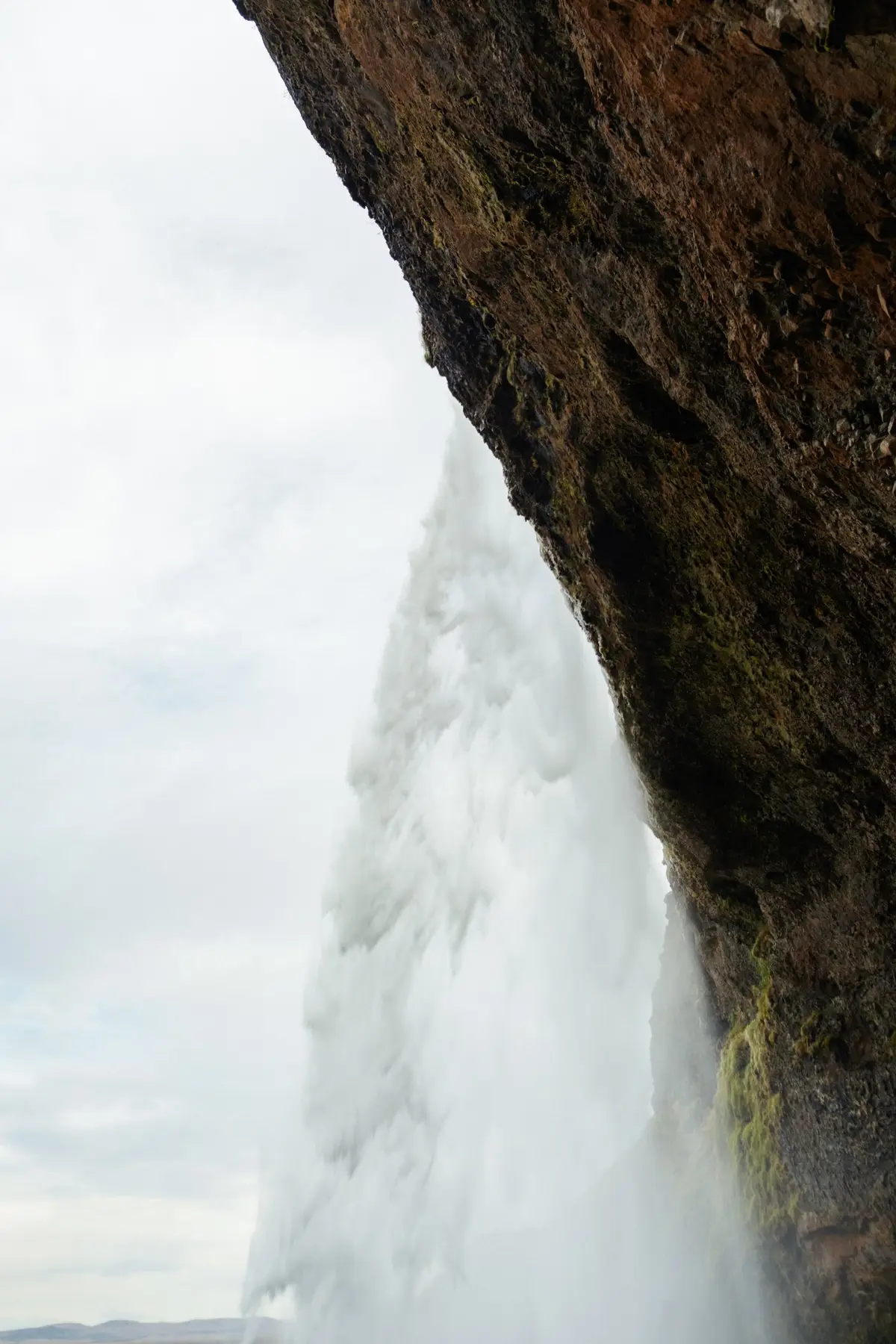
About thirty kilometres west of Skógar, Seljalandsfoss also falls about 60 metres, and a path runs behind it, at the foot of the cliff. In winter the spray freezes on the rock and on the ceiling of the passage, and when the temperature rises the ice breaks off in blocks: the South Iceland tourist board asks visitors to respect closures.
A little further on, hidden in a gorge, is Gljúfrabúi, about 40 metres, which can only be partly seen because a boulder, Franskanef, hides almost the whole drop. People once believed that boulder and the rocks around it were homes of the hidden people. Below it is a small cave, Ömpuhellir, named after a woman who lived there as a hermit. East of Skógafoss, on the other hand, a path from the museum car park leads in a kilometre and a half to Kvernufoss, in a smaller, quieter gorge.
From these waterfalls almost all of us take away photographs, me first of all. The museum is right there, in Skógar, open almost all year, and inside are the things people here kept so as not to lose them, a ring and a button among them. Before climbing the 527 steps, it is worth going in.
We wrote about the fear of arriving in front of a waterfall with the photograph already in your head in what happens when a place becomes content. About the hidden people who live in the rocks, in the story of the elves that make roads bend. And about the weather that in Iceland decides who arrives and who does not, in Icelanders and their weather.
sources
- Þrasi's Ring, Skógasafn (Skógar museum)
- Skógafoss, culture and history, Umhverfisstofnun (Environment Agency of Iceland)
- Skógafoss, Wikipedia
- Þórður Tómasson, Skógasafn
- Skógar Museum and Folk Museum, Skógasafn
- Wooden chest: missing people and their belongings, object S-2242, Skógasafn
- Velvet belt, objects S-540 and S-541, Skógasafn
- Fimmvörðuháls, Wikipedia
- Trails: Fimmvörðuháls, Ferðafélag Íslands (Iceland Touring Association)
- 2010 eruptions of Eyjafjallajökull, Wikipedia
- Þorvaldseyri, geosite panels, Katla Geopark
- Iceland's black ash beast reels in the curious, Julia Waeschenbach (AAP), New Zealand Herald, 26 April 2015
- The rise of volcano tourism in Iceland, Lesley Bellew, Cruise Trade News
- Seljalandsfoss waterfall, Visit South Iceland
- Gljúfrabúi, Visit South Iceland
- Kvernufoss waterfall, Visit South Iceland