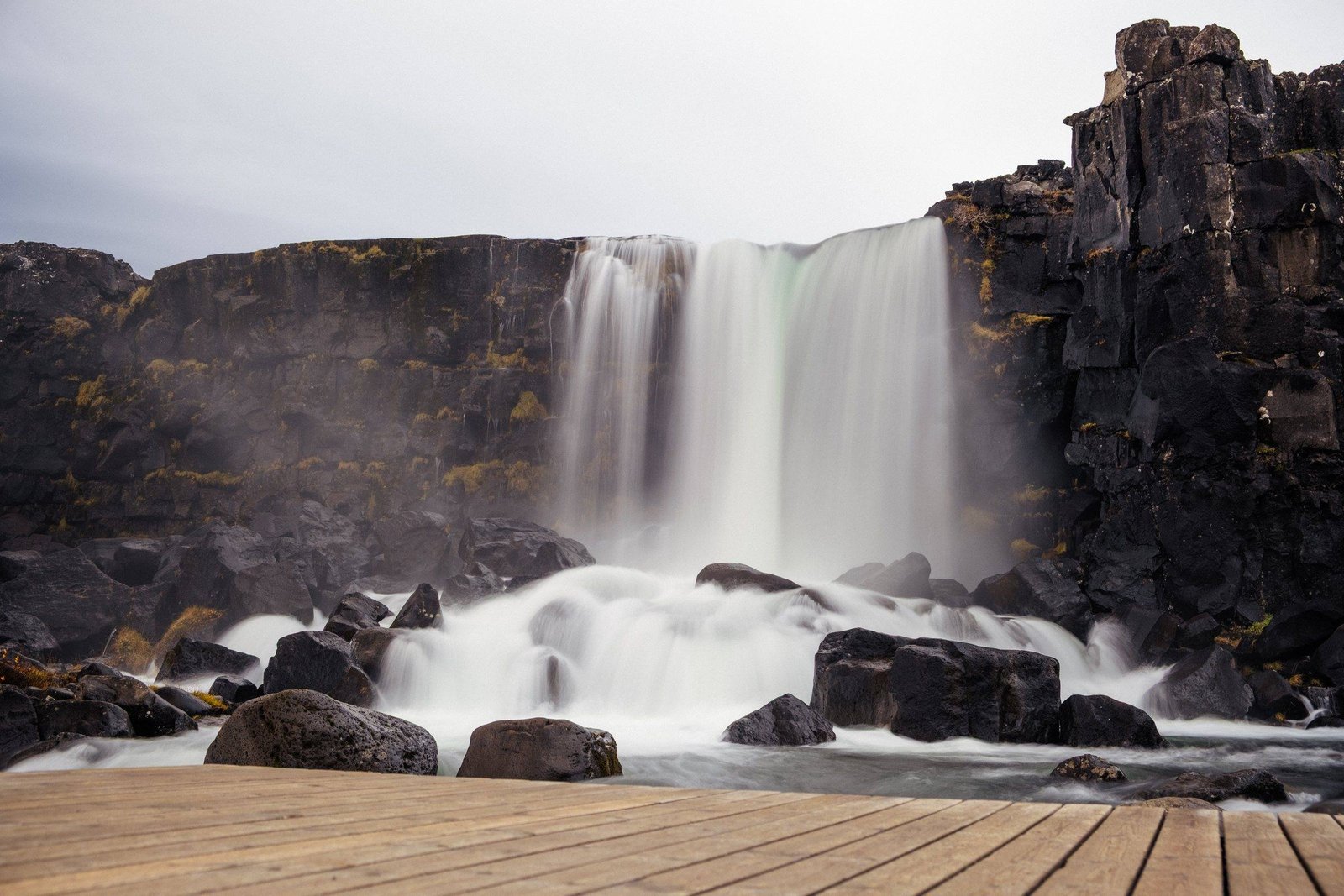

An afternoon of footsteps erases decades: Icelandic moss on the Laki lava
In 1783 ten fissures opened in the south of Iceland, and in the famine that followed one Icelander in five died. Moss now grows over that lava, a millimetre or so a year. A priest, Jón Steingrímsson, wrote it all down.
by Aniello Iervolino 8 min read
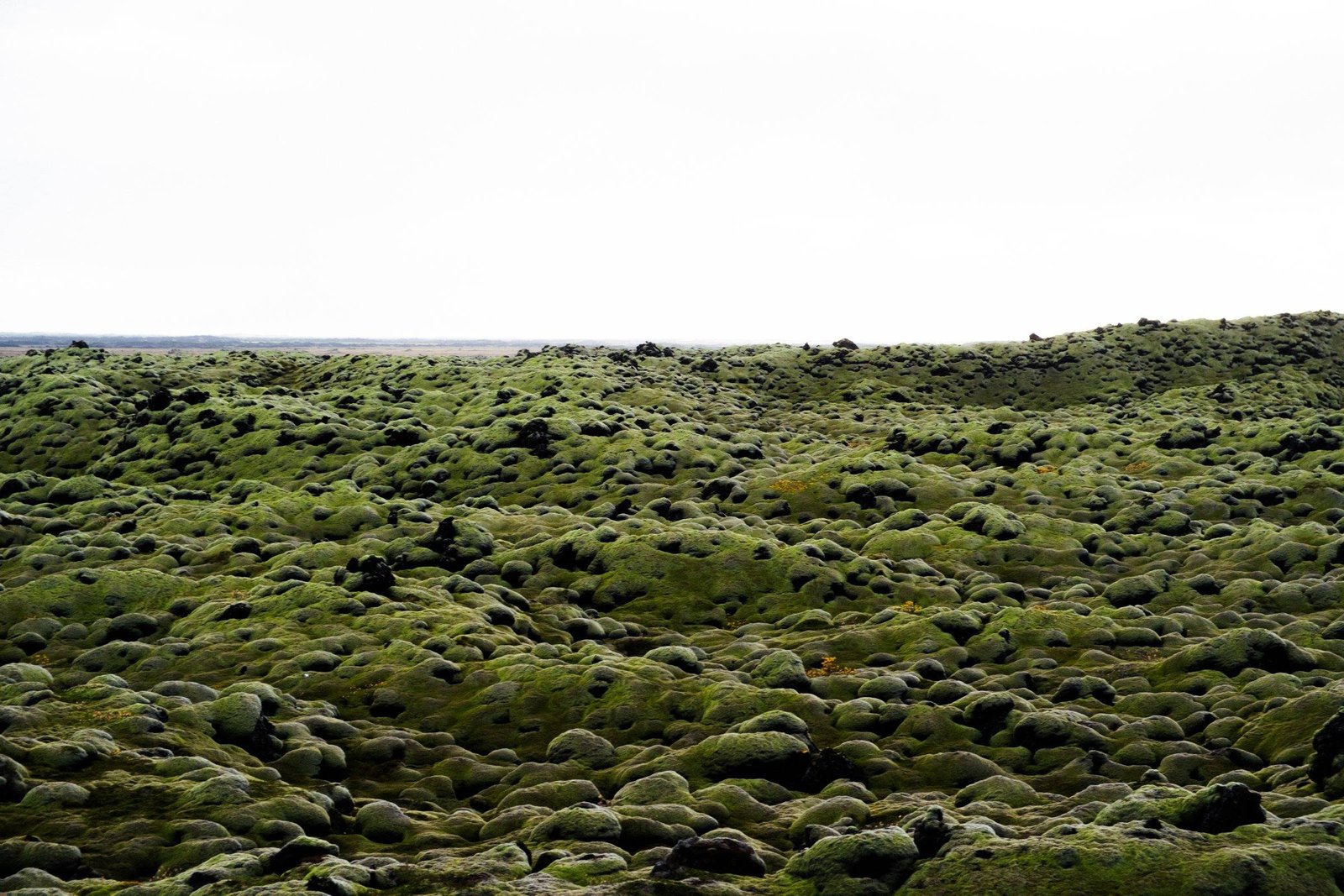
Every strand of that moss grows from the tip and dies from the base. At the top the new part appears, grey when it is dry, yellower and greener when it rains. Underneath, the old part slowly rots and turns into soil. On a lava field it is the first soil there has ever been.
A leaflet the Environment Agency of Iceland devoted to the Laki craters explains this in a few lines. Once you know it, a lava field covered in moss stops looking like a meadow. It looks more like a dressing laid over a wound, and the wound, in the south of Iceland, has a precise date.
We took the photos in this article in October 2026. Looking at them again I wonder how long that green has been there, and what lies beneath it. Both answers are bigger than I imagined.
Whit Sunday, 1783
For days the ground shook. Then, on Whit Sunday, 8 June 1783, the eruption began, with booming, ash and the stench of sulphur. Ten parallel fissures opened one after another, each between two and five kilometres long, and along them about 135 craters formed. By the third day the river Skaftá had already run dry. By the fifth, the lava had travelled 40 kilometres and reached the plain, near the coast.
It lasted eight months, until 7 February 1784. Icelanders call it Skaftáreldar, the fires of the Skaftá. According to the Environment Agency about 15 cubic kilometres of material came out, almost all of it lava: gathered into a single cube, it would make a block two and a half kilometres on each side. At its strongest the flow reached 6,000 cubic metres a second, several times the flow of the island's most powerful rivers. The lava covered about 600 square kilometres, 0.5% of Iceland, split into two branches. The western one is called Eldhraun.
Twenty farms ended up entirely under the lava. Another thirty were unusable for years.
The fire sermon
In Kirkjubæjarklaustur, the nearest village, the priest was called Jón Steingrímsson. He had been born in 1728 in the north, in Skagafjörður, and had come to Klaustur in 1778. He had learned medicine from books and from a doctor friend, and he sometimes took the sick into his own home.
As the lava advanced towards the village, Jón gathered his parishioners in the church. The Environment Agency's leaflet says he saw the eruption as divine punishment for debauchery, laziness and other sins, and that in that service he promised God the community would repent. The lava reached the river Skaftá, at a rock just outside the village, and stopped there. The sources disagree about the day: for most it is 20 July 1783, the leaflet says the 27th. Both were Sundays. The spot where the flow halted has been called Eldmessutangi ever since, fire sermon point. In Klaustur they still remember it, and the church built in 1974 is dedicated to him.
I don't know what to make of a lava flow that stops in front of a sermon, and I think the point lies elsewhere. What strikes me more is what that man did in the months that followed.
The haze
The ash came down on the coastal plain like a black cloud and brought darkness. One line in the leaflet says that footsteps became imprints in the ash. The ash poisoned the pastures and the animals began to die of hunger and poison. Two years after the eruption half the cattle were left, a third of the horses and a fifth of the sheep. With meat running out and milk halved, people began to starve too. Icelanders call those years Móðuharðindi, the hardships of the haze.
About one Icelander in five died, around ten thousand people. Near Laki, two in five. In Denmark, which then ruled the island, the news only arrived in the autumn. A ship loaded with supplies left in November and managed to reach Iceland the following spring. The king went as far as considering moving the surviving Icelanders to Jutland.
The haze did not stop at Iceland. By 23 June it was over Britain, then it covered Europe. Benjamin Franklin, in a lecture in 1784, spoke of a dry, persistent fog that had hung over Europe and North America all through the summer of 1783, and thought of smoke from a volcano near Iceland.
Jón Steingrímsson, for those eight months, stayed beside his parishioners and meanwhile wrote down what he saw. His account of the fires follows the eruption from the first month to the last, fissure after fissure, and volcanologists still use it. In 1784, among so many, his wife Þórunn died too, the woman he had married in 1753. The Icelandic Roots website, telling the story, simply calls her "Jón's beloved Þórunn".
He also wrote the story of his life. He died in 1791 and the manuscript stayed with his daughters. One of them asked for those pages to be destroyed, because some were too personal. The nephew who had received them did not do it. The autobiography came out in full in 1913, and today it can be read in English too, in Michael Fell's translation. I often think about that nephew. Without his small act of disobedience, of a man who watched a fifth of his country die and kept taking notes we would only have the legend of the sermon.
The first green
At the end of the eruption Eldhraun was bare. Today the Environment Agency describes it as a textbook example of succession: first the lava, then moss, then grass, shrubs and, in the end, trees. Moss grows more here than on other lava of the same age, because it rains a lot, the climate is mild and the growing season is long.
The protagonist has a Latin name, Racomitrium lanuginosum, and an Icelandic one, hraungambri. In English it is called woolly fringe-moss. Each leaf ends in a thin, toothed hair point, a form found in no other moss, and it is that hair that gives the cushions their soft, greyish look when they are dry. The leaflet adds a detail I didn't know: the grey lanuginosum grows mostly higher up, on ridges and crater rims, while in the lowlands a yellower relative dominates, Racomitrium ericoides. And both change colour when they get wet.
How long it takes was measured on the other great volcano of the south, Hekla. In 2018 a team from the University of Iceland studied its historical lava flows, from the youngest to those 860 years old, and called the work Of mosses and men. Moss and a few lichens arrive first: a lava flow from 1991 was fully covered after 24 years. Where conditions are good the carpet thickens by a millimetre and a half, a little more, each year. Then comes the long age of moss, when it dominates almost alone, and on Hekla's lava it runs from 170 to 700 years. The authors describe a development that seems to stall, and note that the same thing has been described on the Laki lava itself.
Eldhraun is 243 years old. The green we photograph is only at the beginning of its story.
How long a footstep lasts
In 2014 some researchers deliberately trampled small squares of Icelandic vegetation, in the lowlands and in the mountains, and photographed them every summer until 2017. The study, whose authors include Rannveig Ólafsdóttir, concludes that moss is the vegetation most sensitive to trampling and the slowest to recover. Grasses hold up better. In the mountains moss suffers even more. The Perlan museum in Reykjavík, writing about the vegetation that clothes the lava, gives the order of magnitude: growth of a few millimetres a year, damage that can take decades, even a century, to heal.
Moss has no roots, and that makes it slow to come back. NASA pointed this out in the summer of 2023, when lava from Fagradalsfjall, on the Reykjanes peninsula, set fire to the moss over more than 250 hectares: according to the Icelandic Institute of Natural Science, the largest moss fire ever recorded in the country in modern times.
Then there is the damage we do. In June 2017, near Nesjavellir, writing in English appeared in the moss, including a vulgar invitation. The Reykjavík Grapevine reported the anger of many Icelanders and the question, never answered, of whether it had been tourists or locals. The Environment Agency reminds visitors that lava is protected under the Nature Conservation Act, article 61. It asks people not to carve inscriptions and points out that even walking on it can damage it.
The Iceland moss that is a lichen
There is a misunderstanding worth clearing up. What many languages call Iceland moss, Cetraria islandica, in Icelandic fjallagrös, is a lichen: a fungus and an alga living together. It once went into bread, porridge and soup, boiled to take away the bitterness. Today in Iceland it is used rarely, in a few traditional remedies and a handful of old dishes.
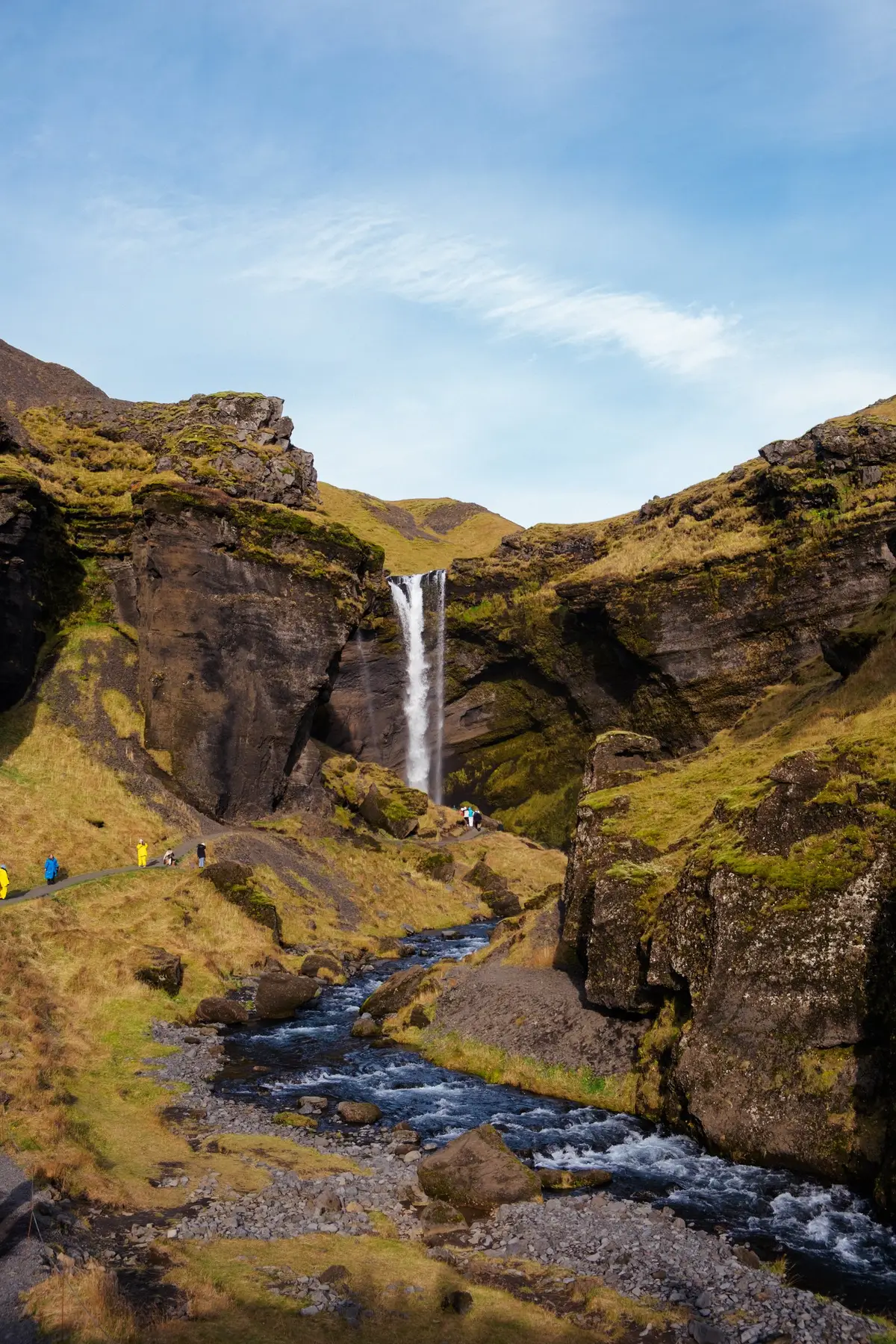
On the lava fields mosses and lichens grow together, and from a step away we can't tell them apart. It doesn't matter. The same numbers apply to both: a few millimetres a year, decades to close a hole.
Footprints
In 1783 footsteps stayed printed in the ash. Today they stay printed in the moss that has grown over that ash. It seems to me the simplest way of saying how slow this place is, and how fast we are as we pass through.
Travelling in Iceland you are always in a hurry: the light changing, the next car park, the next waterfall. The moss of Eldhraun keeps another time. It began to grow while Jón Steingrímsson was burying his parishioners, and a single afternoon of footsteps sets it back by a few decades. To look at it, all you need is to stay on the path.
Moss comes back in the story of the elves that make roads bend, together with the little stone piles that are better left unbuilt. And we talk about what happens to a place when too many people walk on it in the story of Fjaðrárgljúfur canyon. Laki also appears in the photographic itinerary on the Ring Road.
sources
- Lakagígar, leaflet of Skaftafell National Park, Umhverfisstofnun (Environment Agency of Iceland), 2005
- Laki, Wikipedia
- Skaftáreldar, Icelandic Wikipedia
- Kirkjubæjarklaustur, Wikipedia
- The Fire Priest, Icelandic Roots, September
- Racomitrium lanuginosum, Wikipedia
- Of mosses and men: plant succession, soil development and soil carbon accretion in the sub-Arctic volcanic landscape of Hekla, Iceland, Vilmundardóttir et al., University of Iceland, Progress in Physical Geography, 2018
- Image analysis to monitor experimental trampling and vegetation recovery in Icelandic plant communities, Runnström, Ólafsdóttir, Blanke and Berlin, Environments, 2019
- Iceland Moss, Perlan museum, Reykjavík
- Lava and Smoke Blanket Fagradalsfjall, NASA Earth Observatory, 3 August 2023
- Island Life: Cold Fronts, Vegetables, Norwegian Aircraft, The Reykjavík Grapevine, 18 June 2017
- Volcanic sites, Umhverfisstofnun (Environment Agency of Iceland)
- Cetraria islandica, Wikipedia